



🇬🇼 eSIM plans for Guinea-Bissau

Starting at $19.26/day*
  • No data caps
  • 7-days valid
  • Fast, reliable connection
  • Skip the roaming bill
  • QR code emailed instantly
Get your unlimited data
How many days
More days, lower daily rate
7
How many eSIMs
More eSIMs, bigger discount
1
Install it now or once you're away. Nothing starts counting until you reach your destination and switch the eSIM on.

* The "as low as" figure is the lowest per-day rate, taken from the longest unlimited data plan on sale here.

Secure Checkout
Visa Mastercard PayPal Amex Diners JCB
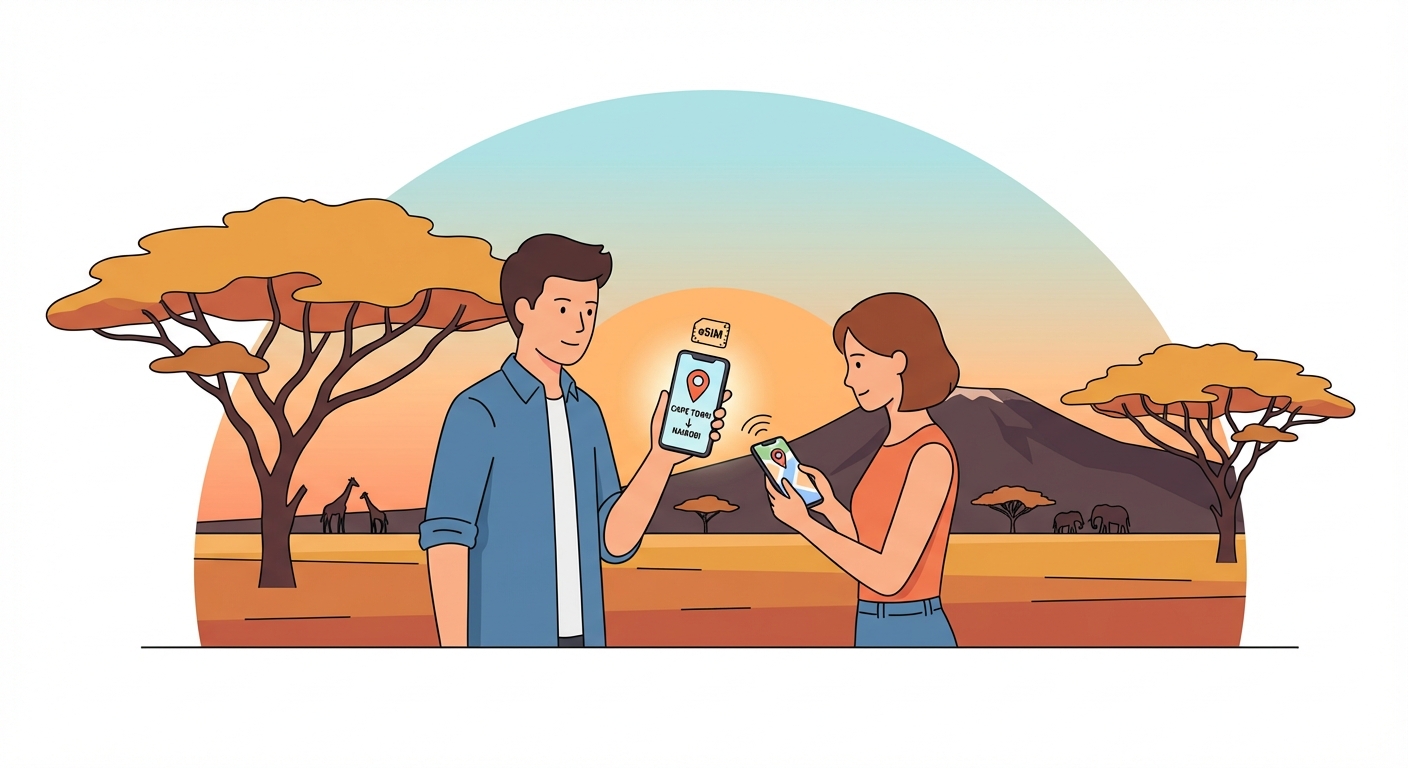
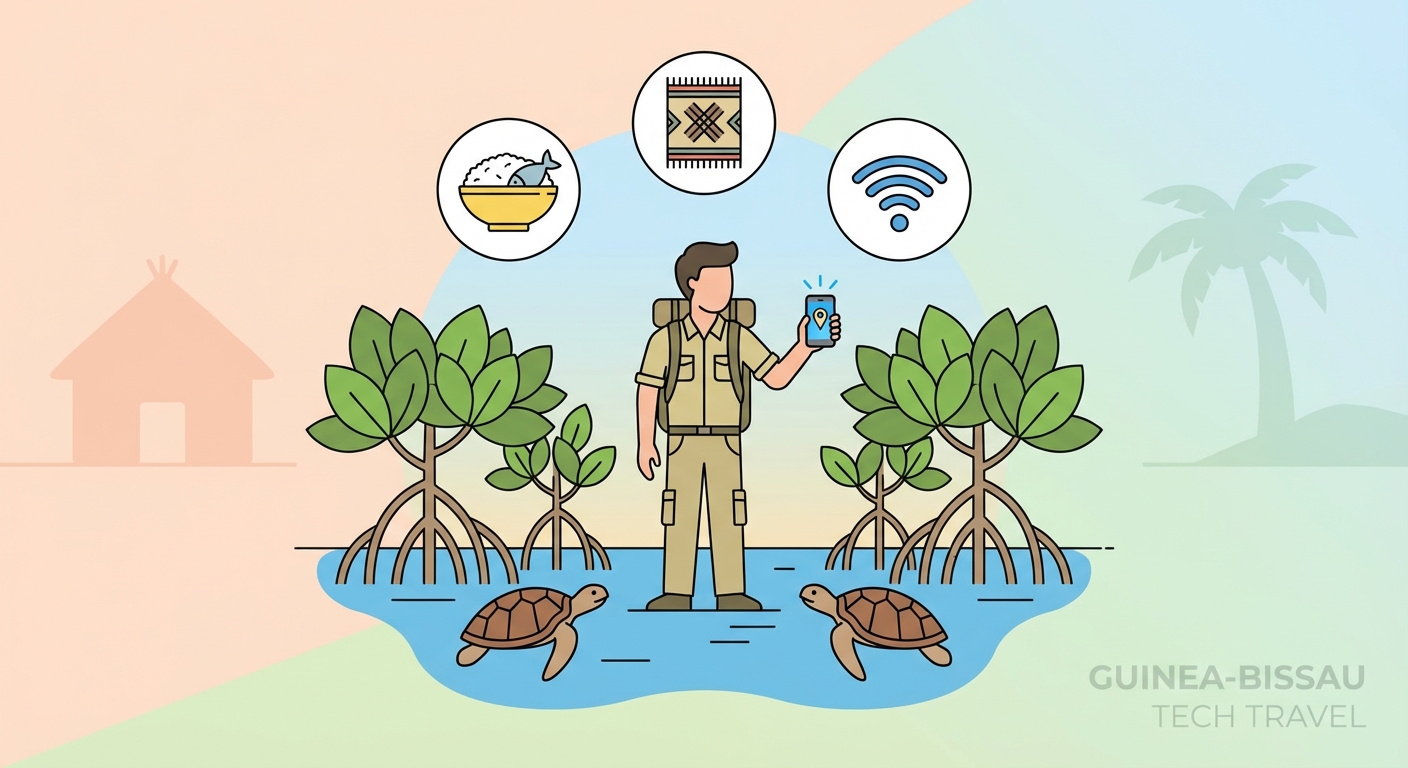
Guinea-Bissau eSIM travel illustration

Why buy from us?

Here's how Onetel stacks up against other options in Guinea-Bissau.

Onetel
Local SIM card
Roaming
Uncapped data plans
Activates instantly
Your number stays the same
No surprise charges
No lock-in
24/7 support
Africa eSIM

Cover the Region with Africa eSIM

Cover Guinea-Bissau and every neighboring country on one regional eSIM — no SIM swaps, no extra fees. Starting at $1.71.

View Africa Plans
🇬🇼

eSIM costs for Guinea-Bissau

Prices shown in USD

7 days of unlimited data in Guinea-Bissau costs $135.44 — about $19.35 a day on Orange Bissau or MTN Guinea-Bissau, with no roaming charge and no SIM to swap.

Duration Price Daily cost
1 day $20.34 $20.34/day
3 days $58.70 $19.57/day
5 days $97.08 $19.42/day
7 days $135.44 $19.35/day
10 days $192.98 $19.30/day
15 days $288.90 $19.26/day
30 days $24.38 $0.81/day
🇬🇼

Which Guinea-Bissau eSIM plan fits your trip?

Choose your Guinea-Bissau eSIM by matching the allowance and validity period to your trip, then compare the selected product details with the local network, band and speed references already shown on this page.

Start with the length of your stay, then allow for navigation, messaging, streaming and work use. Each option below is a plan size that is currently available for this destination.

Short trip

1 GB / 7 days

Best for: A short visit with maps, messages and occasional browsing.

This option pairs the 1 GB allowance with a stated validity period of 7 days.

Usage tip: Save maps before longer journeys and use Wi-Fi for large downloads.
Two-week trip

3 GB / 15 days

Best for: A stay of around two weeks with regular navigation and messaging.

The 3 GB allowance remains available across a stated validity period of 15 days.

Usage tip: Keep automatic app updates and cloud backups on Wi-Fi.

Longer or higher use

10 GB or more / 30 days

Best for: A longer stay or more frequent streaming, video calls or work use.

The 10 GB or more / 30 days profile provides a larger data pool than the short-trip options on this page.

Usage tip: Compare the allowance with your normal phone usage and monitor it during the trip.

🇬🇼

Which networks you connect to in Guinea-Bissau

Your eSIM roams onto Guinea-Bissau's own operators. These are the networks and the frequencies they run — check your phone supports them before you travel.

Operator 4G / LTE bands 5G bands 5G
Orange Bissau B1, B3 — No
MTN Guinea-Bissau B1, B3 — No

Coverage in Guinea-Bissau

Mobile coverage is concentrated along the coast and main roads; large inland areas including parts of Bafatá and Gabú regions have limited or no service. 3G remains the dominant data layer outside Bissau and regional capitals.

How to check mobile coverage in Guinea-Bissau

The Guinea-Bissau mobile network source is linked below as a public network reference. Check the places on your itinerary where the source offers local detail, then confirm the network information for the selected eSIM product. The operator table on this page provides the country-level reference, while the selected product details identify which network information applies to your plan.

Accommodation and daily stops

Check your accommodation and the places you expect to visit in Guinea-Bissau. Indoor reception can differ from an outdoor map, so keep the property Wi-Fi details available as well.

Journeys between stops

Review the full route rather than checking only the arrival city. Save tickets, addresses and maps offline before longer road or rail journeys.

Borders and onward travel

Check the selected product scope for every country on your itinerary. Your Guinea-Bissau plan and a regional plan may have different included destinations and validity periods.

Phone compatibility in Guinea-Bissau

Compare your phone with 4G bands B1, B3 in the existing Guinea-Bissau network table. Support for more of the listed bands gives the phone more options when connecting, while the selected product, location and local network conditions determine the service available.

Set up the Guinea-Bissau eSIM for your trip

Keep the QR code and installation instructions available offline, and complete each step according to the selected product's instructions.

When validity starts: Validity-start rules can differ by product. Check the selected plan details before installation and travel.

  1. Confirm that your phone is unlocked and supports eSIM before purchase.
  2. Save the QR code or manual installation details somewhere you can reach without mobile data.
  3. Use reliable Wi-Fi to install the profile at the time recommended in the product instructions.
  4. When you are ready to use it, select the travel eSIM for cellular data and apply the stated roaming and APN settings.
  5. Keep roaming disabled on your home line if you want to avoid using its travel data.
Network and coverage sources, checked 2026-10-10
Guinea-Bissau travel guide

How to Enjoy Guinea-Bissau

Guinea-Bissau is West Africa's hidden corner, where Portuguese and African cultures blend along quiet rivers and forested islands. The Bijagós Archipelago, a UNESCO Biosphere Reserve, offers some of the region’s most pristine wildlife habitats. To enjoy the country, base yourself in Bissau for a day or two, then travel by boat to the archipelago for kayaking, birdwatching, and meeting local communities. The pace is slow; use it. Roads outside the capital can be rough, so plan extra travel time. English is not widely spoken; learn a few phrases in Portuguese or Crioulo. Cash is king, and euros or CFA francs are easiest. Always ask permission before photographing people. The country is safe for travellers who use common sense, but avoid walking alone after dark in cities. Malaria is present, so take prophylaxis and sleep under a net.

Top Attractions

Guinea-Bissau’s attractions are raw and uncrowded. Choose experiences that match your interests:

  • Bijagós Archipelago - A UNESCO Biosphere Reserve of 88 islands. Home to saltwater hippos, sea turtles, and traditional Bijagó villages. Boat trips from Bissau or Buba take several hours.
  • Orango Islands National Park - Part of the archipelago, famous for hippos and chimpanzees. Requires a guide and advance permission.
  • Bissau's Fortim d'Amuleta and City Market - The fort offers a view of the river and colonial past. The market sells local crafts, spices, and fresh produce.
  • Cacheu Region - Explore the Cacheu River mangroves, the old slave-trade fort, and the village of São Domingos.
  • Gabu Kingdom Ruins - Inland, near the border with Senegal. Remains of a Fulani kingdom with traditional architecture.

Whether you focus on nature or history, choose two or three places rather than rushing across the whole country.

Local Foods to Try

Guinea-Bissau’s cuisine blends West African staples with Portuguese influences. Fresh fish and rice are central. Try these dishes:

  • Cachupa - A hearty stew of beans, corn, vegetables, and sometimes fish or meat. Similar to a Portuguese feijoada but lighter.
  • Grilled Fish with Palm Oil Sauce - Fresh catch (barracuda, snapper) grilled over coals, served with a spicy red palm oil sauce. Look for it in Bissau’s beachside eateries.
  • Arroz com Peixe - Simple rice with fish, often cooked with tomato, onion, and chili. A common lunch dish.
  • Fried Plantains and Cassava Fritters - Street food staples. Plantains are sliced and fried; cassava is grated, shaped, and deep-fried. Sold at markets and roadside stalls.

Popular drinks include fresh coconut water and sweet ginger juice. Avoid tap water; drink bottled or filtered water. Street food is generally safe if cooked in front of you and served hot.

Best Time to Visit

Guinea-Bissau has a tropical climate with two main seasons. The dry season runs from November to May. This is the best time for travel. Roads are passable, the Bijagós Archipelago and inland parks are accessible, and wildlife gathers near water sources. Temperatures are high but less humid than in the wet months. From June to October the rainy season brings heavy downpours, flooded roads, and many lodges close or become hard to reach. Birdwatchers may still find good conditions early in the wet season, but most travellers should plan for November through May. Within the dry season, December to February are the coolest and most comfortable months. March to May can be very hot, especially inland. If you visit during the wet season, expect delays and book flexible transport.

What to Pack

Guinea-Bissau’s tropical climate and rough infrastructure call for careful packing. Bring these essentials:

  • Lightweight, breathable clothing - Cotton and linen are best. Long sleeves and pants protect against mosquitoes and sun. Avoid dark colours that attract heat.
  • Sun protection - High SPF sunscreen, a wide-brimmed hat, and UV-blocking sunglasses. The sun is intense year-round.
  • Insect repellent - Mosquito-borne diseases are common. Use a DEET-based repellent and bring a mosquito net if you plan to sleep in basic lodgings.
  • Waterproof bag or dry bag - For boat trips to the Bijagós Archipelago and for protecting electronics during sudden downpours.
  • Comfortable walking shoes and sandals - Shoes for city streets and trails, sandals for beaches and boat decks.

Prepare for limited electricity and no ATMs outside Bissau. Bring a power bank, a flashlight, and enough cash for your stay.

Common Questions

The details worth knowing about your Guinea-Bissau eSIM

No. This eSIM is for Guinea-Bissau only. If you cross the border into Senegal you will need a separate eSIM or local SIM for that country. Check your plan details before travelling between the two.

Probably not. The two local operators, Orange Bissau and MTN Guinea-Bissau, both use 4G bands B1 and B3 only. A phone lacking these bands may struggle to connect to 4G and could fall back to slower 3G or no service.

Coverage is limited in large inland areas, including parts of Bafatá and Gabú. Mobile service is concentrated along the coast and main roads. Outside Bissau and regional capitals, 3G is the dominant data layer and may be unreliable or absent.

The eSIM will connect to either Orange Bissau or MTN Guinea-Bissau, depending on signal strength and your location. Both networks offer 4G on bands B1 and B3, but no 5G service is available in the country.

Local SIM registration rules vary, but eSIM activation is handled before travel. You do not need to present your passport or ID upon arrival. The service works as soon as you have a signal, subject to local network availability.

Compare 1 GB / 7 days, 3 GB / 15 days and 10 GB or more / 30 days. Use the shorter profiles for lighter maps and messaging use, then compare the larger allowance for streaming, video calls or work apps.

The start rule is product-specific. Review the selected plan details before installing it so you know whether any action is required before arrival.

Save the QR code, manual installation details, APN guidance and the support instructions supplied with the selected plan.
24/7 Support

Stuck? Talk to a human.

Live chat and email are staffed the whole way through — before you fly and while you're abroad. Replies typically land in under 2 minutes.

Talk to us
Onetel customer support

Bundle Guinea-Bissau with other countries close by.