





1 GB / 7 days
Best for: A short visit with maps, messages and occasional browsing.
This option pairs the 1 GB allowance with a stated validity period of 7 days.
Usage tip: Save maps before longer journeys and use Wi-Fi for large downloads.

* The "as low as" figure is the lowest per-day rate, taken from the longest unlimited data plan on sale here.
Here's how Onetel stacks up against other options in Thailand.
Prices shown in USD
7 days of unlimited data in Thailand costs $31.78 — about $4.54 a day on AIS, TrueMove H or dtac, with no roaming charge and no SIM to swap. In Thailand, 5G is live and median mobile download speed is 41.3 Mbps.
Choose your Thailand eSIM by matching the allowance and validity period to your trip, then compare the selected product details with the local network, band and speed references already shown on this page.
Start with the length of your stay, then allow for navigation, messaging, streaming and work use. Each option below is a plan size that is currently available for this destination.
Best for: A short visit with maps, messages and occasional browsing.
This option pairs the 1 GB allowance with a stated validity period of 7 days.
Usage tip: Save maps before longer journeys and use Wi-Fi for large downloads.

Best for: A stay of around two weeks with regular navigation and messaging.
The 3 GB allowance remains available across a stated validity period of 15 days.
Usage tip: Keep automatic app updates and cloud backups on Wi-Fi.
Best for: A longer stay or more frequent streaming, video calls or work use.
The 10 GB or more / 30 days profile provides a larger data pool than the short-trip options on this page.
Usage tip: Compare the allowance with your normal phone usage and monitor it during the trip.
Your eSIM roams onto Thailand's own operators. These are the networks and the frequencies they run — check your phone supports them before you travel.
Source: Ookla Speedtest Global Index, Q2 2025
n258 (26 GHz mmWave) deployment is limited to dense urban areas and select venues; B40 (2300 MHz) is widely used for LTE but absent from many international phone models.
The Thailand mobile network source is linked below as a public network reference. Check the places on your itinerary where the source offers local detail, then confirm the network information for the selected eSIM product. The operator table on this page provides the country-level reference, while the selected product details identify which network information applies to your plan.
Check your accommodation and the places you expect to visit in Thailand. Indoor reception can differ from an outdoor map, so keep the property Wi-Fi details available as well.
Review the full route rather than checking only the arrival city. Save tickets, addresses and maps offline before longer road or rail journeys.
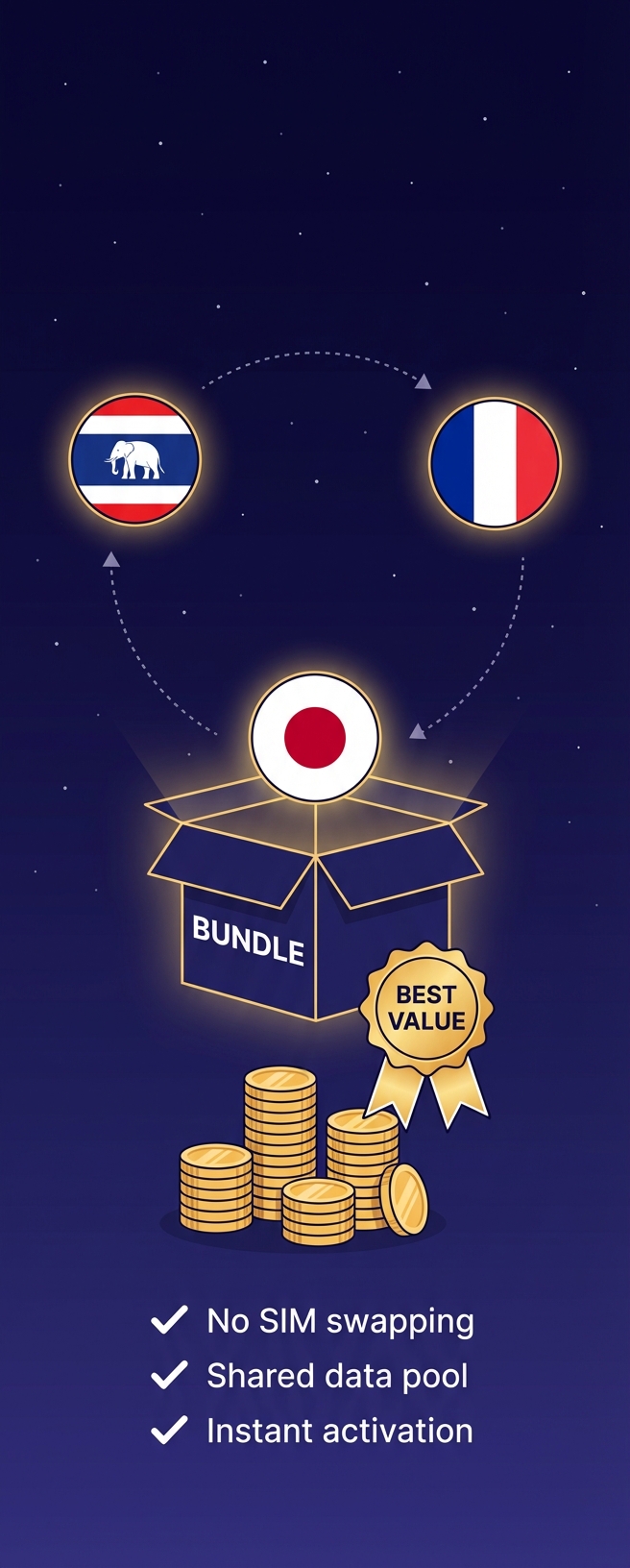
Check the selected product scope for every country on your itinerary. Your Thailand plan and a regional plan may have different included destinations and validity periods.
Compare your phone with 4G bands B1, B3, B8, B40 and 5G bands n28, n41, n258 in the existing Thailand network table. Support for more of the listed bands gives the phone more options when connecting, while the selected product, location and local network conditions determine the service available.
Keep the QR code and installation instructions available offline, and complete each step according to the selected product's instructions.
When validity starts: Validity-start rules can differ by product. Check the selected plan details before installation and travel.
Thailand is a welcoming destination, but a few practical tools make travel smoother. Download the Grab app for reliable ride-hailing in Bangkok, Chiang Mai, and on Koh Samui. It works like familiar ride services and shows fares upfront. For communication, Google Translate handles Thai script and spoken phrases well, especially the camera translation feature for menus and signs.
In cities like Bangkok and Chiang Mai, traffic can be heavy during rush hours, so plan extra time. On the islands of Koh Lanta and Phi Phi, cash is king; ATMs are available but can run low. With these two apps and some small bills, you will move through Thailand with ease.
Thailand rewards visitors who choose quality over quantity. Here are five places worth your time.
From Bangkok's temples to the Andaman Sea, these sites represent Thailand's depth. Here, the Grand Palace and Wat Phra Kaew stand as Southeast Asia's most revered landmarks.
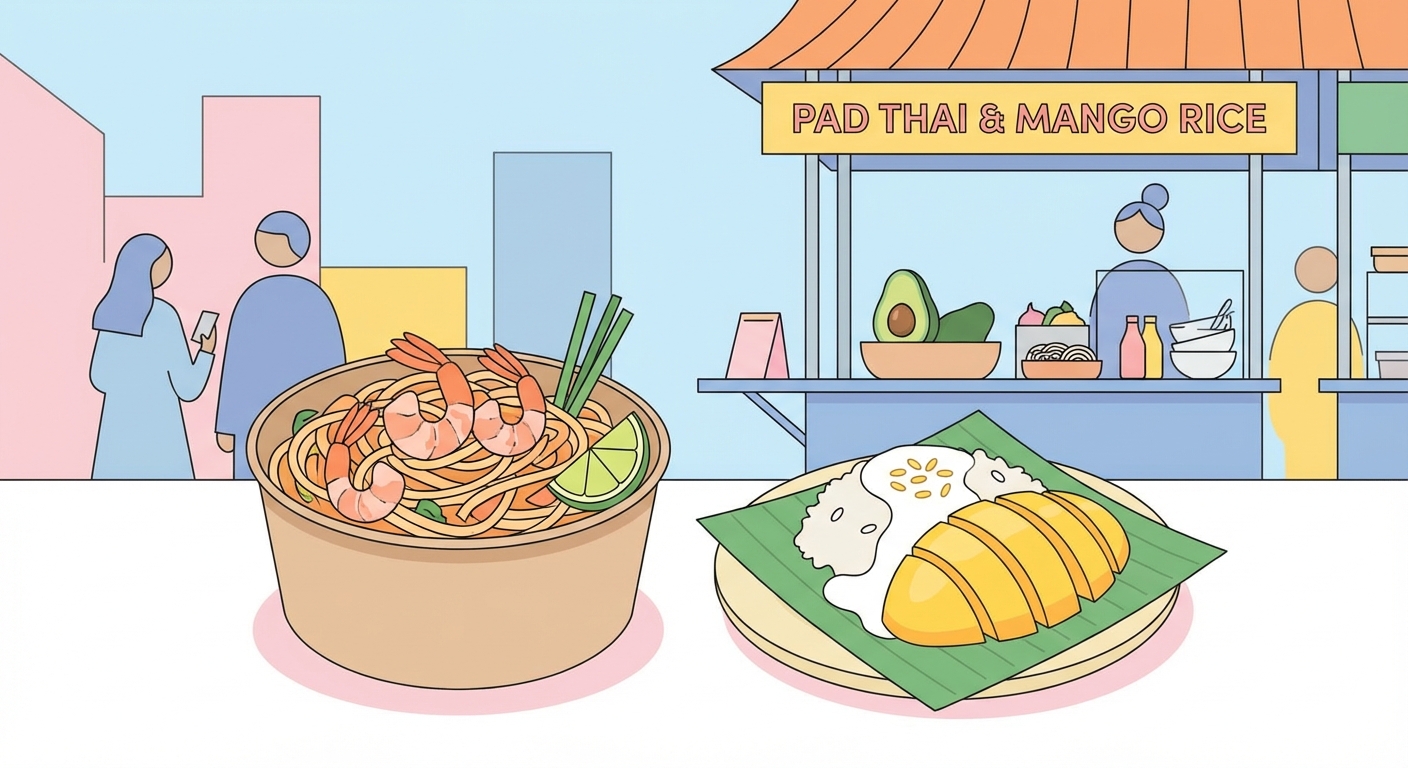
Thai food is lively and varied. Start with these five dishes that define the cuisine.
In Bangkok's street stalls and Chiang Mai's night bazaars, these dishes appear often. Always check for fresh ingredients. Khao Soi, a northern curry noodle soup, is another specialty worth seeking out.
Thailand has a tropical climate with three main seasons. The best time for most visitors is November through February. Temperatures are pleasant, humidity is low, and rainfall is minimal. This is peak season, so book accommodations and transport well in advance.
From March to May, the hot season arrives. Temperatures can exceed 40°C in Bangkok and the central plains. Coastal areas like Phuket and Koh Samui remain bearable. April brings Songkran, Thailand's New Year water festival, which is fun but chaotic.
The rainy season runs from June to October. While downpours are frequent, they are often brief. This period offers lower prices and fewer crowds. For northern destinations like Chiang Mai, the rains bring lush greenery. Avoid the islands of Koh Samui and Koh Lanta during full moons if you prefer quiet.
Pack light and smart for Thailand's tropical climate.
Pack a reusable water bottle with a filter to reduce plastic waste. Most hotels provide basic toiletries, but a small first-aid kit is wise for remote areas.
The details worth knowing about your Thailand eSIM
Live chat and email are staffed the whole way through — before you fly and while you're abroad. Replies typically land in under 2 minutes.
Talk to us
Browse eSIM plans for more countries worldwide.