eSIM or Physical SIM

Which one suits your trip? A side-by-side look at convenience, cost, availability, and compatibility to help you decide.

The quick verdict 1

For travel, eSIM takes it — with one condition

eSIM is quicker, handier, and now broadly supported. The condition: your phone has to be compatible. Models from iPhone XR onwards and most 2020-and-later Android flagships support eSIM. For which countries support eSIM, check our eSIM coverage guide.
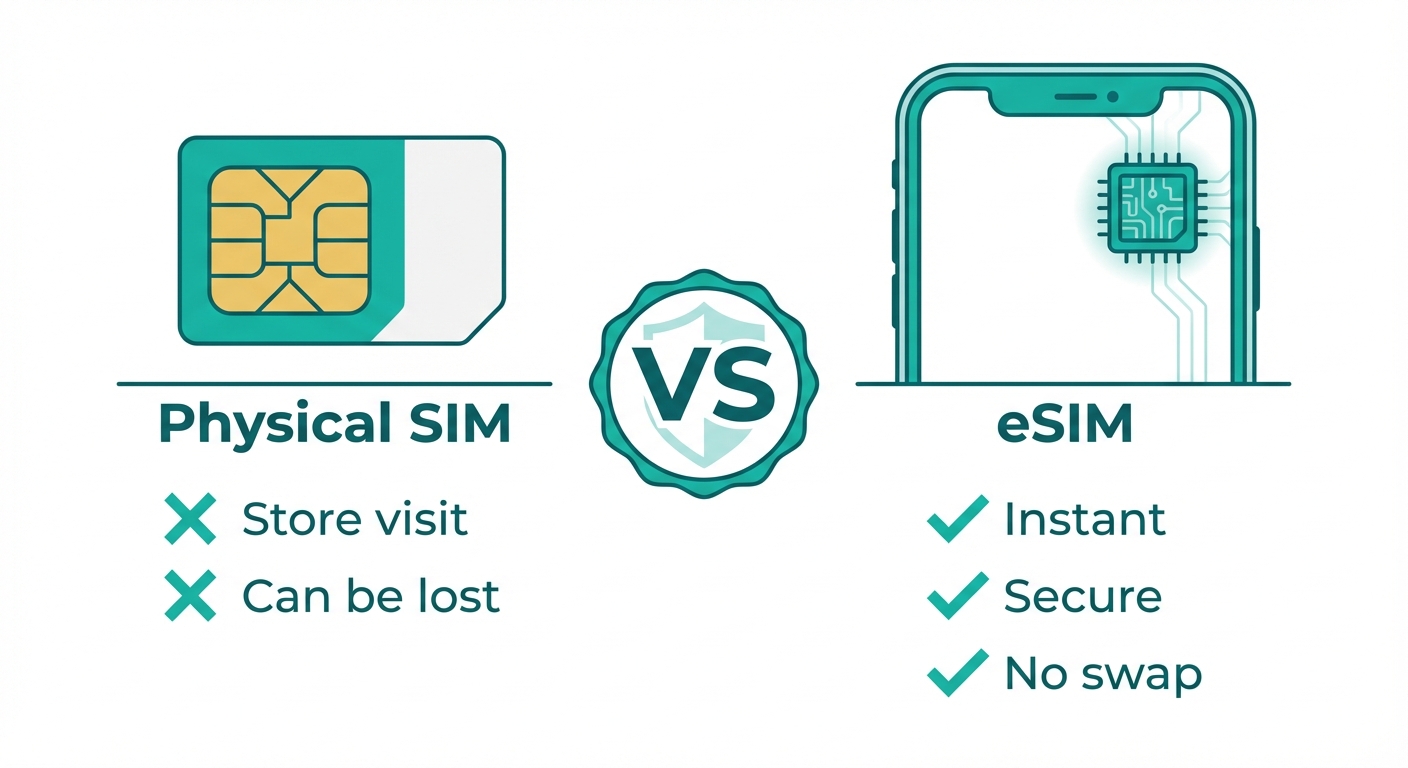
Speed
eSIM is active within minutes. A physical SIM means a shop visit, buying locally, or waiting for a delivery.
Convenience
No tiny cards, no ejector pin, no risk of losing your home SIM. It all lives in software.
Cost
For travellers, eSIM data plans usually cost the same or less than local physical SIMs — with no roaming surcharge.
Compatibility
iPhone XR (2018) and most Android flagships from 2020 work with eSIM. Older phones need a physical SIM.
eSIM vs physical SIM comparison
See the full comparison 2

Full comparison — 10 key factors

Factor
eSIM
Physical SIM
Time to activate
Minutes (scan QR)
Shop visit or days in post
Switching carriers
Instant in settings
Swap SIM card
Two lines at once
Yes — eSIM + nano SIM
Varies by phone
Physical theft risk
None — can't be removed
Card can be stolen or lost
Works abroad
Instant local plan abroad
Needs unlocked phone + local SIM
Coverage
190+ countries on eSIM
Depends on which SIM you buy
Cost
Competitive, no roaming
Varies — often pricey at airports
Device requirement
iPhone XR+ / Android 2020+
All phones — universal
Lost/damaged risk
Zero — embedded in device
Can be lost, bent, or damaged
Where to buy
Online only
Available in shops

eSIM comes out on top in 8 of 10 factors travellers care about. Ready to compare? See the best eSIM providers or find out how to run eSIM + physical SIM at the same time.

Exceptions 3

When a physical SIM still makes sense

eSIM suits most trips, but not every one. In three situations a physical SIM remains the smarter choice. Check the eSIM data plans guide to compare costs and plan options.

Phones made before 2019

An iPhone 8 or earlier, or an older Android, has no eSIM support. A physical SIM is the only way to get data.

Carrier-locked handsets

Budget phones sold locked to a carrier cannot use third-party eSIMs until you unlock them. Contact your carrier to check.

Markets with patchy eSIM coverage

A few countries still have limited eSIM infrastructure. Cuba, parts of sub-Saharan Africa, and some other markets depend mainly on physical SIMs.

Tip

If you are heading to a place with limited eSIM support, see our eSIM coverage guide before you book.
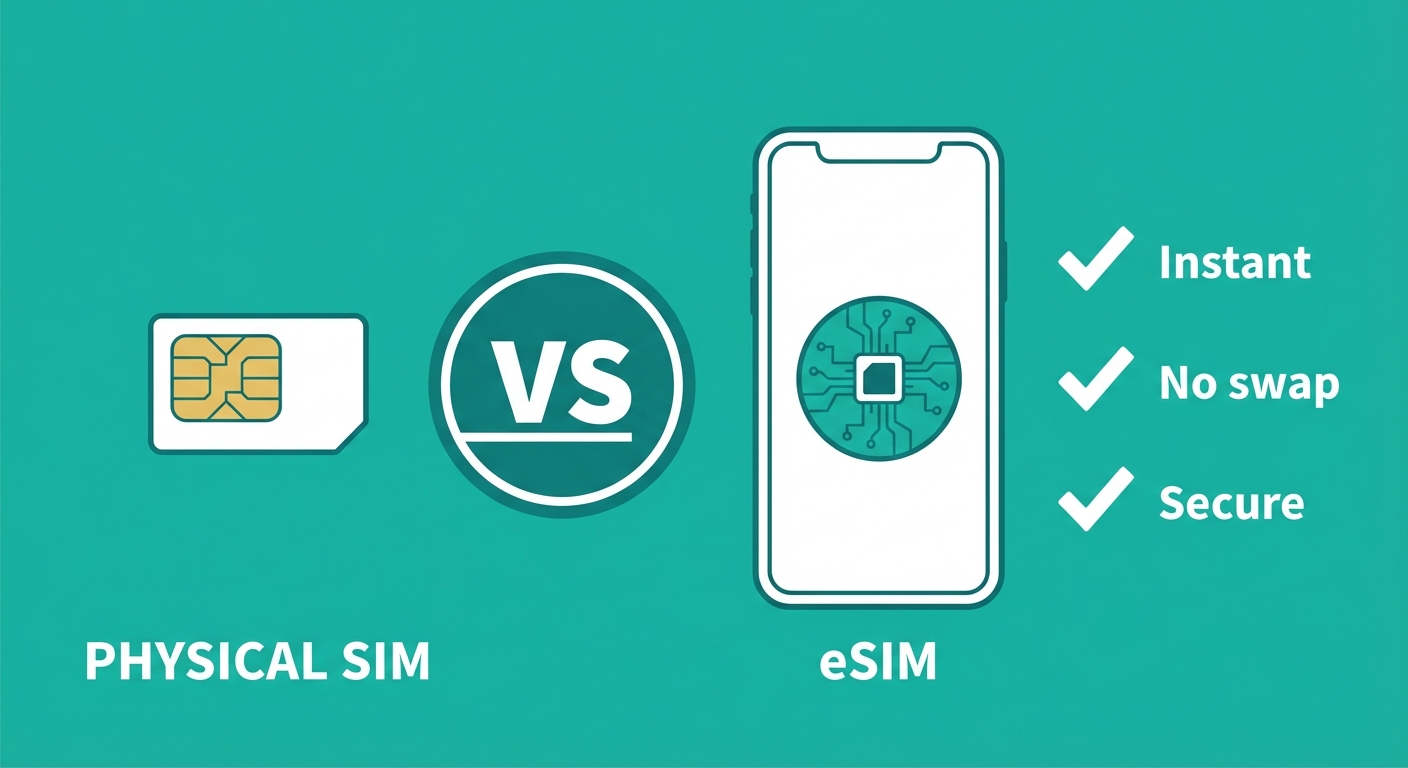
Compatibility 4

Which phones take an eSIM?

Brand
eSIM support starts
Status
Apple
iPhone XR / XS (2018)
✓ eSIM
Samsung
Galaxy S20+ (2020)
✓ eSIM
Google
Pixel 3 (2018)
✓ eSIM
Huawei
Limited — check your model
Limited
Others
See the manufacturer's spec sheet
Limited
eSIM vs physical SIM comparison

Making the move to eSIM?

Browse Onetel Data in 190+ countries. Set up in minutes — skip the shop counter.