Choosing an eSIM Data Plan
Prepaid vs postpaid, data-only vs voice-enabled — and how to choose the right plan for your trip.
Prepaid vs postpaid — start with prepaid when travelling
A prepaid plan means you pay before you use a set amount of data. When that runs out, top it up. No end-of-trip bill, no hidden extras. For travel, prepaid usually wins. Not sure which provider to pick? Check the best eSIM providers ranked.
A postpaid plan You are billed at the end of each monthly cycle — a fit for residents and extended stays, though more than a 1–2 week trip usually needs.
Need voice on your eSIM?
Most travellers skip voice and rely on WhatsApp, FaceTime or Google Meet for calls. It costs far less, and works anywhere your eSIM has signal — which is wherever you have data. Check eSIM coverage by country to confirm support before you fly.
Our recommendation: For trips under 3 months, data-only plus WhatsApp keeps costs down without missing the essentials.
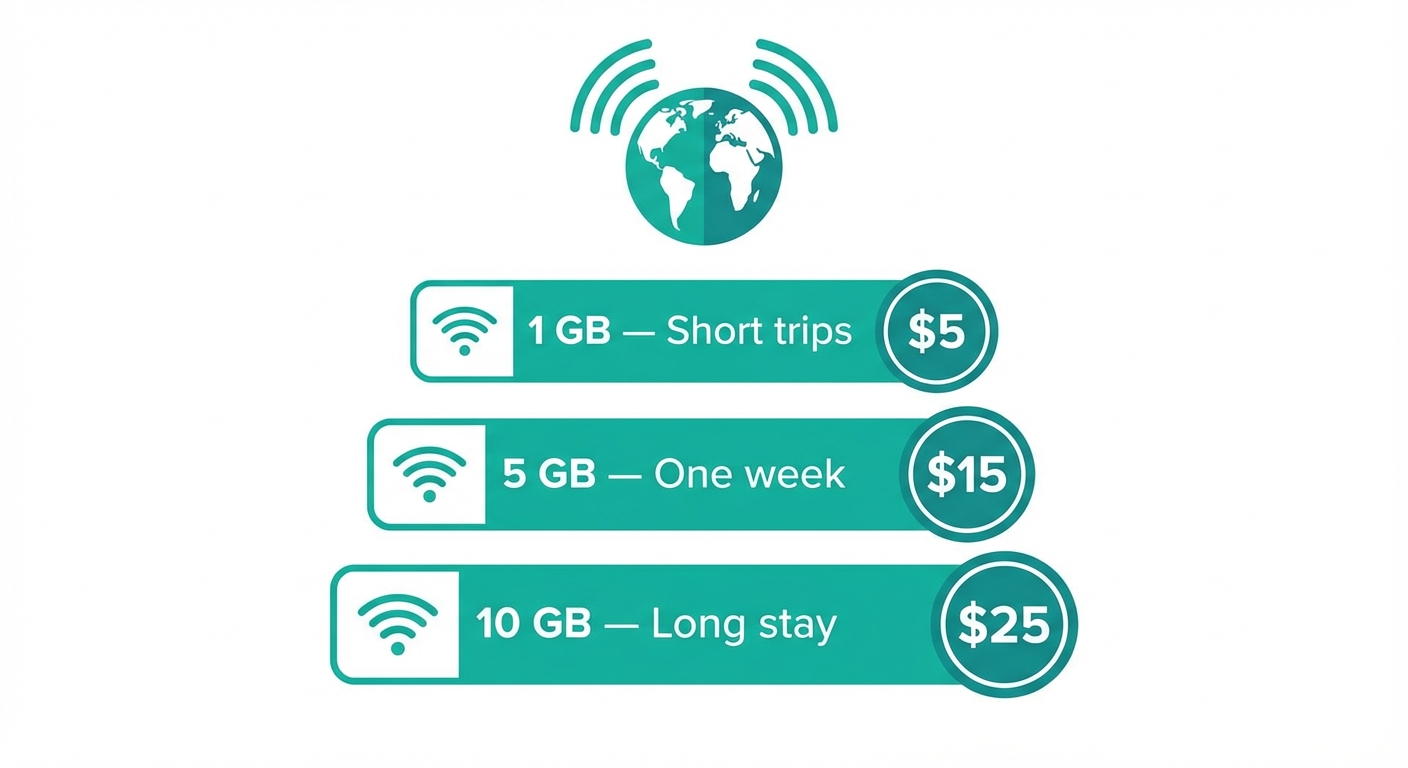
How much data do I need?
Check validity before you commit
A 7-day plan that runs out mid-trip is money down the drain. Validity usually starts from the first time you connect, not when you buy it — but that varies by provider. Read the terms before paying. For a side-by-side look at eSIM vs physical SIM costs, see our eSIM vs physical SIM guide.
Your plan's validity begins the moment the eSIM first connects to a network, not when you buy it.
Purchase in advance, then install and activate only when you're ready to go.
Need more data? Many plans let you add extra without swapping your eSIM.