Choose Your Starting Point
The first decision a traveller to Thailand faces is where to eat your first real meal. You can head straight for a busy street stall or sit down at a modest restaurant. Each choice shapes your experience. Street food offers speed, low cost, and direct contact with local cooking. Restaurants give you air conditioning, menus in English, and often cleaner facilities. Neither is wrong, but your first meal sets a tone. If you arrive hungry and tired, a restaurant might suit you better. If you want to jump into the culture immediately, find a stall with a queue of locals.
well-known Street Food and Local Dishes
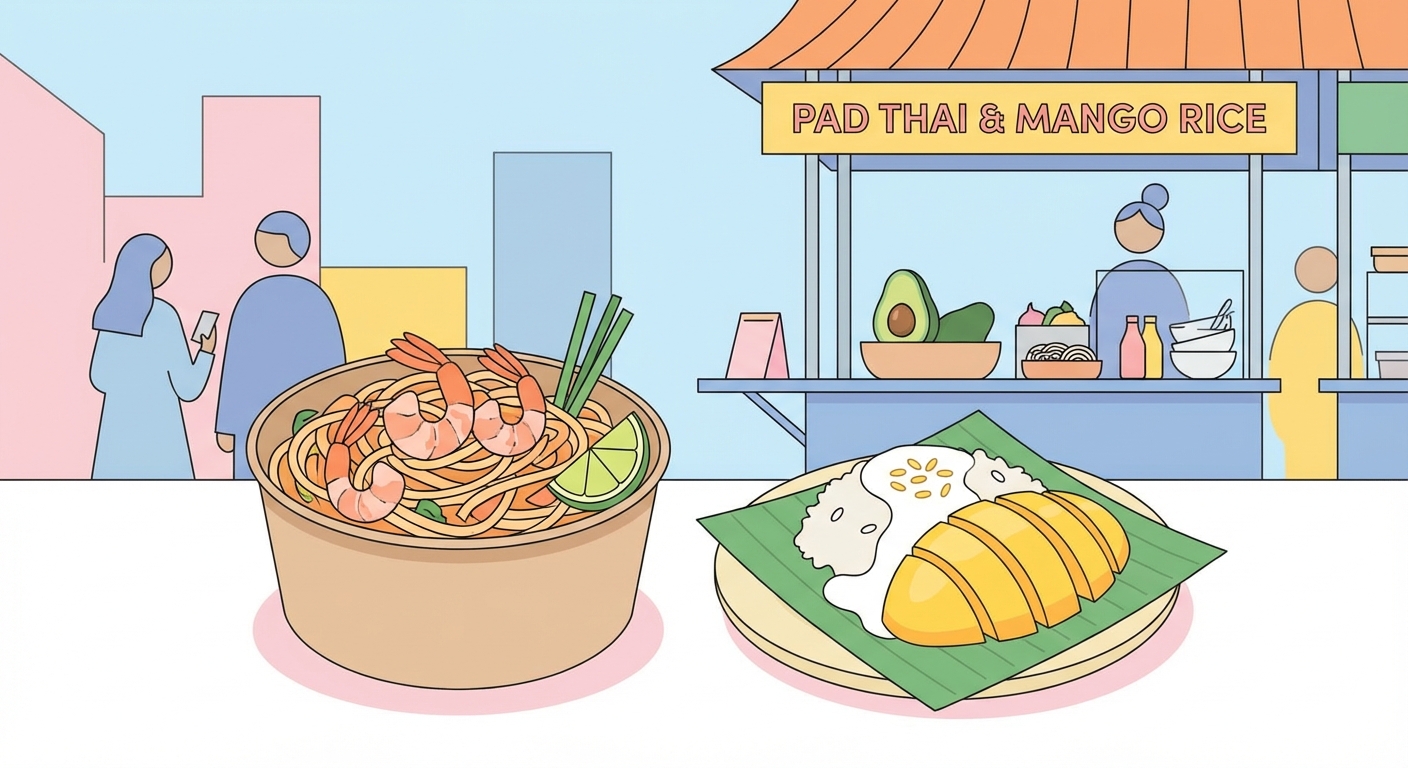
Thai street food is famous for a reason. Pad Thai, the stir-fried noodle dish, appears everywhere. It balances sweet, sour, and salty. Another staple is Som Tam, a green papaya salad that is spicy, sour, and crunchy. You will also see grilled skewers called satay, often served with peanut sauce. For soup lovers, boat noodles (kuaytiao ruea) offer a rich, dark broth. Green curry from the south is milder and coconut-based, while red curry from the north uses more dried spices. Each region has its own variations. Bangkok's Chinatown, especially Yaowarat Road, is a good place to sample several dishes in one evening.
Timing and Practical Choices
Meal timing in Thailand differs from Western habits. Breakfast is often a simple bowl of rice soup or a fried pastry. Lunch is the main meal for many locals, eaten between 11am and 1pm. Dinner starts early, around 5pm to 7pm. Street food vendors usually operate from late afternoon until late night. If you want the freshest food, go when the stalls open. Avoid eating at places that have pre-cooked food sitting out for hours. Look for stalls where the cook is actively preparing each order. This ensures freshness and reduces the risk of stomach upset. Spice levels vary. Most vendors will ask if you want it spicy. If you are not used to chili, say “mai phet” (no spicy) or “phet nit noi” (a little spicy).
Regional Variations and What to Order
Northern Thailand, around Chiang Mai, is known for khao soi, a coconut curry noodle soup with crispy egg noodles on top. Central Thailand, including Bangkok, has a wider mix of influences from Chinese and Indian cooking. Southern Thailand uses more coconut milk and fresh turmeric. Isaan food from the northeast is the spiciest, with raw meat salads and fermented fish. When you order, consider sharing. Thai meals are often served family-style. Order two to three dishes for two people. This lets you try more flavors. A typical meal includes one curry, one stir-fried vegetable or meat, and one soup or salad. Rice is always served on the side. Drink water or iced tea to cool your palate.
One Clear Recommendation
For a first-time visitor, start with a guided street food tour in a major city. This removes the guesswork and introduces you to safe vendors. After one or two tours, you will know what to look for: clean stalls, high turnover, and local customers. From there, explore on your own. Yaowarat Road in Bangkok is a reliable starting point. Order a portion of pad thai from a stall that cooks it fresh, then a bowl of boat noodles from a vendor nearby. Finish with a serving of mango sticky rice for dessert. This sequence covers sweet, sour, salty, and spicy. It also shows you the range of Thai cooking in one evening. Avoid ordering the same dish twice in a row. Variety is the strength of Thai food.
Final Practical Notes
Carry small bills and coins. Many street vendors cannot break large notes. Bring hand sanitizer or wet wipes. Some stalls do not have running water for washing hands. Drink only bottled or boiled water. Ice in drinks is usually safe because it is made from purified water, but confirm with the vendor. If you have a sensitive stomach, ease into street food over two days. Start with cooked dishes and skip raw salads on day one. By day three, you will likely handle most foods without trouble. The best advice is simple: eat where the locals eat. If a stall is busy, the food is fresh and the price is fair. Thailand's food culture rewards curiosity and patience. Take your time, try new things, and do not be afraid to ask for recommendations from the person next to you.