Most travellers spend weeks planning their Thailand itinerary and only a few minutes on what to pack. That is a mistake. The wrong clothes and gear can ruin a day at a temple or a night on a Khao San Road bar stool. This guide flips the priority: pack for the climate and culture first, then plan your route around what you have brought.
Climate-Appropriate Clothing and Footwear
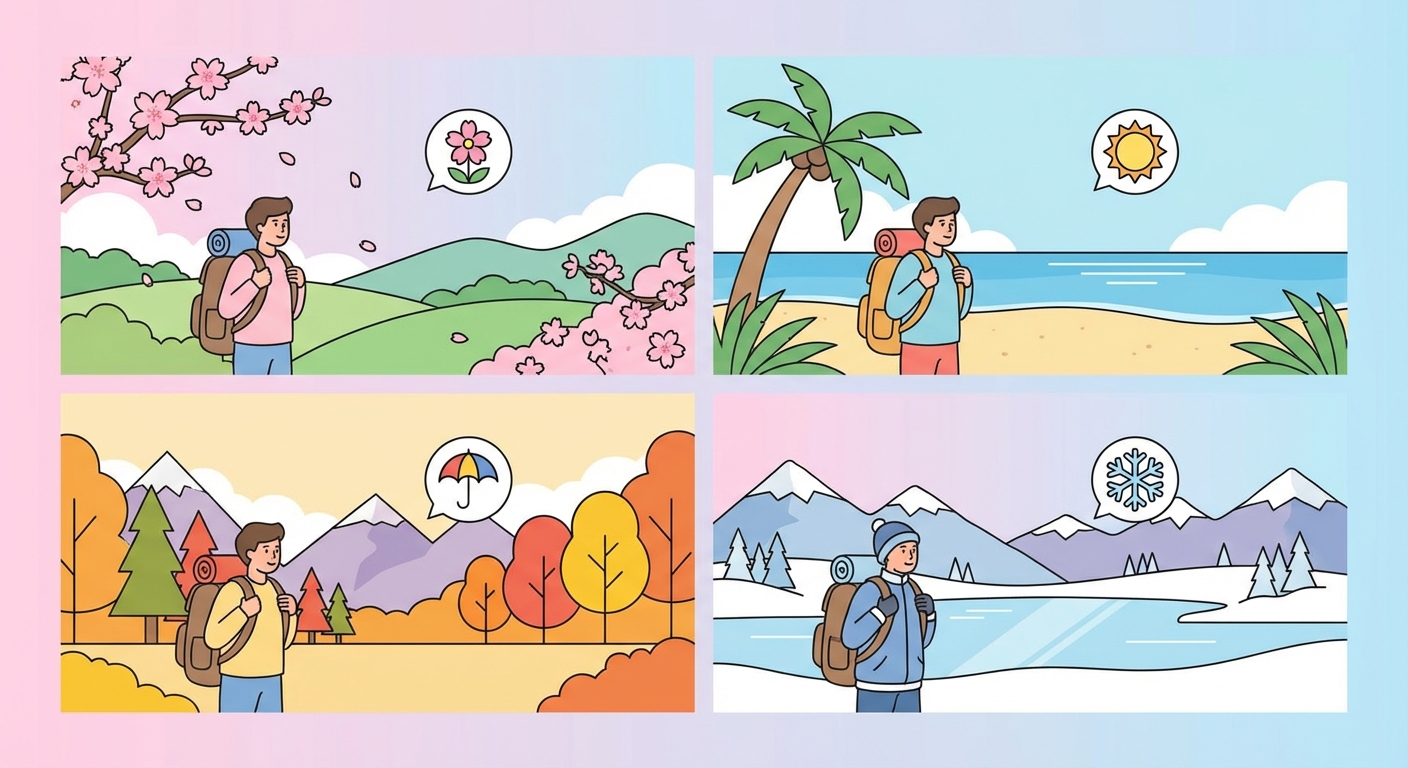
Thailand has two main seasons: hot and dry (November to April) and hot and wet (May to October). In October you are in the tail end of the wet season, so expect high humidity, 30+°C highs, and sudden downpours. Lightweight, quick-dry fabrics are non-negotiable. Cotton works but takes forever to dry; synthetic blends or bamboo viscose are better. Loose-fitting long trousers and long-sleeved shirts are not just for temples. They protect against mosquitoes, sunburn, and the stares you get in beach towns if you walk into a 7-Eleven in just board shorts. One pair of comfortable walking shoes or trainers is fine for cities and national parks. Flip-flops are fine for the beach and hotel, but get a pair of sturdy sandals with a back strap for wet streets and markets. Do not bring heavy boots. Do not bring more than one pair of closed-toe shoes.
The Temple Kit
Every temple in Thailand requires covered shoulders and knees. A lightweight sarong or a long scarf works as both a cover-up and a towel. A thin, long-sleeved cotton shirt is better than a tank top because you can keep it on all day. A small, foldable tote bag is useful for storing your hat and flip-flops while you walk barefoot through temple grounds. Do not bring a big backpack into a temple; you will have to take it off to enter many halls, and it becomes a nuisance. A cross-body bag that sits flat against your hip is ideal.
Rain and Sun Protection
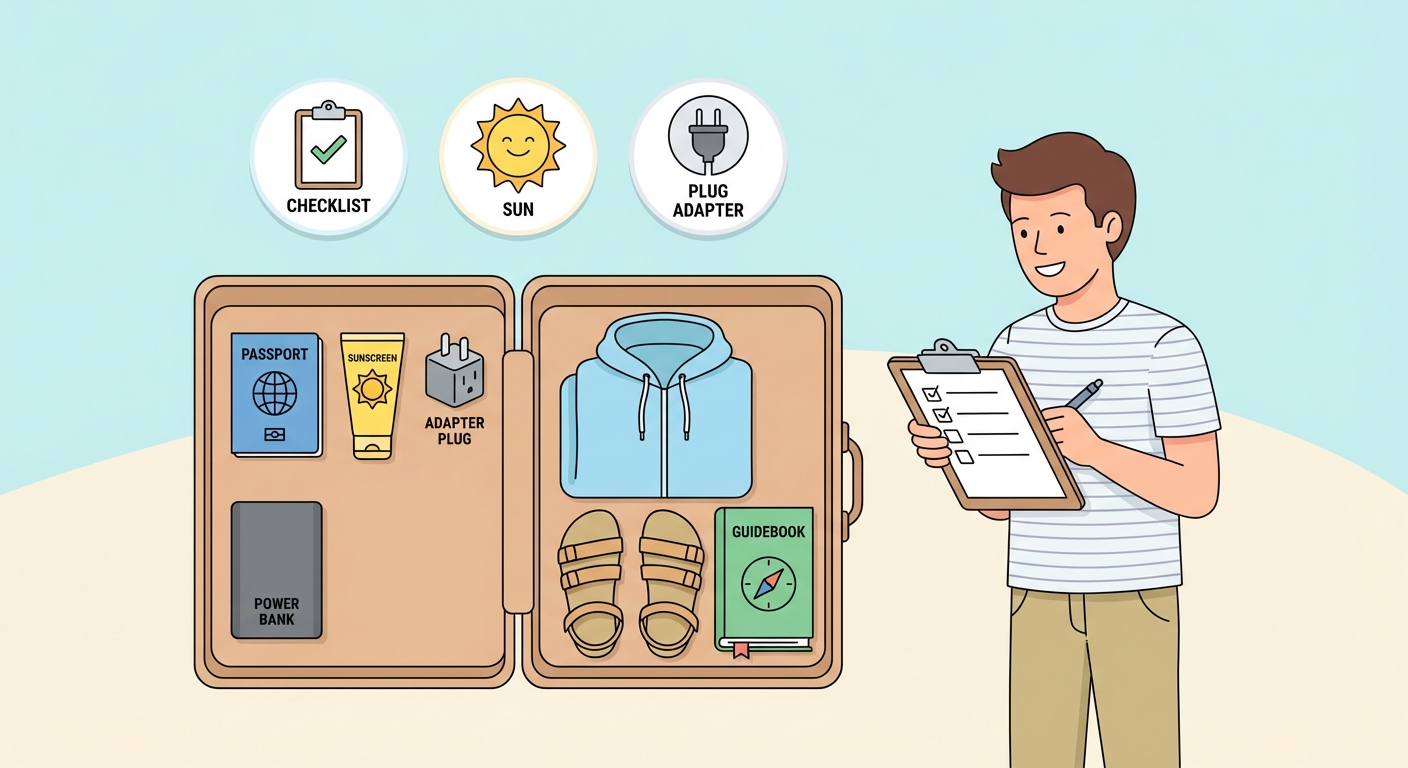
An umbrella is more practical than a raincoat in Thailand. The rain is warm and often brief, and an umbrella keeps your head and bag dry while letting your skin breathe. A compact travel umbrella that fits in your daypack is the right choice. A wide-brimmed hat is better than a baseball cap because it shades your neck and ears. Sunscreen is essential. Pack SPF 50 or higher, and bring enough for at least a week because local brands are expensive and often have a lower SPF rating. A small pack of reef-safe sunscreen is worth the extra weight if you plan to snorkel. Do not rely on a hotel or tour operator to provide it.
Electronics and Documents
A universal travel adapter with two flat pins (US-style) works in most Thai outlets, but many newer hotels have universal sockets. A power bank is useful because you will use your phone for maps, translation, and booking taxis. Keep a digital copy of your passport, visa, and flight details in a secure cloud folder. A physical photocopy of your passport in a separate bag from the original is a good backup. Do not bring a laptop unless you plan to work. A tablet or phone is enough for most travellers.
Toiletries and Health
Insect repellent with DEET is a must for evenings and rural areas. Dengue fever is present year-round in Thailand, and the mosquitoes that carry it bite during the day. A small first-aid kit with plasters, antiseptic wipes, and rehydration salts is more useful than a full pharmacy. Hand sanitiser is widely available in Thailand, but bring a small bottle for the plane and for the first few days. Do not bring a big bottle of shampoo or shower gel; you can buy those at any 7-Eleven for under 100 baht.
What to Leave at Home
Leave the jewellery, expensive watches, and designer bags at home. Thailand is safe, but it is not the place to flash wealth. Leave the heavy guidebooks; a single photo on your phone or a printed map of your first few days is enough. Leave the formal wear. Even the nicest rooftop bar in Bangkok will let you in with clean jeans and a collared shirt. Leave the hiking boots unless you have a specific trek booked. Leave the multiple swimsuits; one or two will dry overnight in the humidity. The best thing you can pack is an attitude of flexibility. The weather will change, your plans will shift, and the local shop will have most things you forgot. Pack light, pack smart, and you will spend less time worrying about your luggage and more time enjoying the trip.