



🇲🇦 eSIM plans for Morocco

Starting at $5.27/day*
  • No data caps
  • 7-days valid
  • Fast, reliable connection
  • Skip the roaming bill
  • QR code emailed instantly
Get your unlimited data
How many days
More days, lower daily rate
7
How many eSIMs
More eSIMs, bigger discount
1
Install it now or once you're away. Nothing starts counting until you reach your destination and switch the eSIM on.

* The "as low as" figure is the lowest per-day rate, taken from the longest unlimited data plan on sale here.

Secure Checkout
Visa Mastercard PayPal Amex Diners JCB
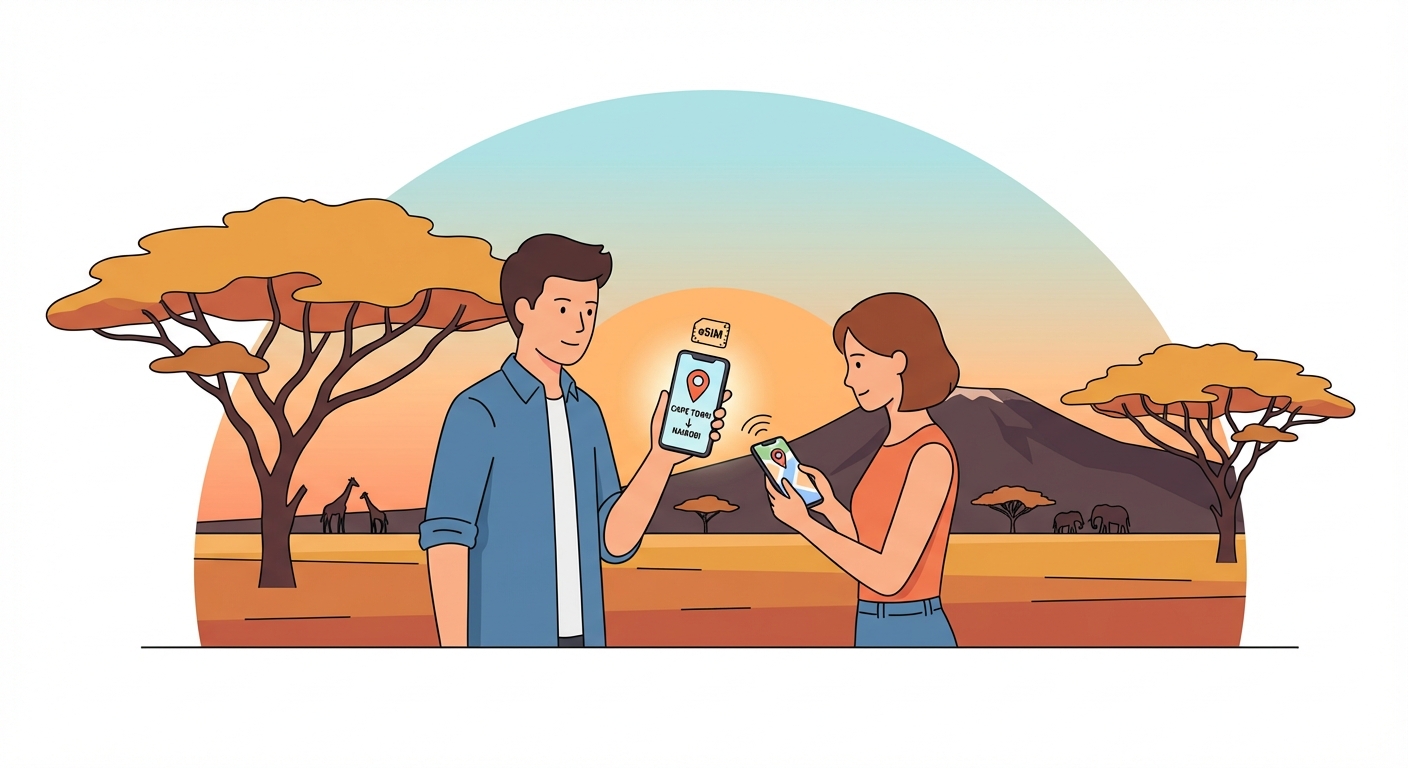
Morocco eSIM travel illustration

Why buy from us?

Here's how Onetel stacks up against other options in Morocco.

Onetel
Local SIM card
Roaming
Uncapped data plans
Activates instantly
Your number stays the same
No surprise charges
No lock-in
24/7 support
Africa eSIM

Cover the Region with Africa eSIM

Cover Morocco and every neighboring country on one regional eSIM — no SIM swaps, no extra fees. Starting at $1.71.

View Africa Plans
🇲🇦

eSIM costs for Morocco

Prices shown in USD

7 days of unlimited data in Morocco costs $37.78 — about $5.40 a day on Maroc Telecom, Orange Maroc or inwi, with no roaming charge and no SIM to swap. In Morocco, 5G is live and median mobile download speed is 33.8 Mbps.

Duration Price Daily cost
1 day $6.40 $6.40/day
3 days $16.86 $5.62/day
5 days $27.32 $5.46/day
7 days $37.78 $5.40/day
10 days $53.46 $5.35/day
15 days $79.64 $5.31/day
30 days $158.10 $5.27/day
🇲🇦

Which Morocco eSIM plan fits your trip?

Choose your Morocco eSIM by matching the allowance and validity period to your trip, then compare the selected product details with the local network, band and speed references already shown on this page.

Start with the length of your stay, then allow for navigation, messaging, streaming and work use. Each option below is a plan size that is currently available for this destination.

Short trip

1 GB / 7 days

Best for: A short visit with maps, messages and occasional browsing.

This option pairs the 1 GB allowance with a stated validity period of 7 days.

Usage tip: Save maps before longer journeys and use Wi-Fi for large downloads.
Two-week trip

3 GB / 15 days

Best for: A stay of around two weeks with regular navigation and messaging.

The 3 GB allowance remains available across a stated validity period of 15 days.

Usage tip: Keep automatic app updates and cloud backups on Wi-Fi.

Longer or higher use

10 GB or more / 30 days

Best for: A longer stay or more frequent streaming, video calls or work use.

The 10 GB or more / 30 days profile provides a larger data pool than the short-trip options on this page.

Usage tip: Compare the allowance with your normal phone usage and monitor it during the trip.

🇲🇦

Which networks you connect to in Morocco

Your eSIM roams onto Morocco's own operators. These are the networks and the frequencies they run — check your phone supports them before you travel.

Operator 4G / LTE bands 5G bands 5G
Maroc Telecom B1, B3, B8, B20 n78 Yes
Orange Maroc B1, B3, B7, B20 n78 Yes
inwi B1, B3, B20 n78 Yes
33.8 Mbps
Median download
11.2 Mbps
Median upload

Source: Ookla Speedtest Global Index, July 2025

Coverage in Morocco

Western Sahara region has limited or no service from Moroccan operators due to political status; B20 (800 MHz) is a key LTE band in Morocco that some non-European/Asian phone models lack.

How to check mobile coverage in Morocco

The Morocco mobile network source is linked below as a public network reference. Check the places on your itinerary where the source offers local detail, then confirm the network information for the selected eSIM product. The operator table on this page provides the country-level reference, while the selected product details identify which network information applies to your plan.

Accommodation and daily stops

Check your accommodation and the places you expect to visit in Morocco. Indoor reception can differ from an outdoor map, so keep the property Wi-Fi details available as well.

Journeys between stops

Review the full route rather than checking only the arrival city. Save tickets, addresses and maps offline before longer road or rail journeys.

Borders and onward travel

Check the selected product scope for every country on your itinerary. Your Morocco plan and a regional plan may have different included destinations and validity periods.

Phone compatibility in Morocco

Compare your phone with 4G bands B1, B3, B7, B8, B20 and 5G bands n78 in the existing Morocco network table. Support for more of the listed bands gives the phone more options when connecting, while the selected product, location and local network conditions determine the service available.

Set up the Morocco eSIM for your trip

Keep the QR code and installation instructions available offline, and complete each step according to the selected product's instructions.

When validity starts: Validity-start rules can differ by product. Check the selected plan details before installation and travel.

  1. Confirm that your phone is unlocked and supports eSIM before purchase.
  2. Save the QR code or manual installation details somewhere you can reach without mobile data.
  3. Use reliable Wi-Fi to install the profile at the time recommended in the product instructions.
  4. When you are ready to use it, select the travel eSIM for cellular data and apply the stated roaming and APN settings.
  5. Keep roaming disabled on your home line if you want to avoid using its travel data.
Network and coverage sources, checked 2026-10-10
Morocco travel guide

How to Enjoy Morocco

From the medinas of Marrakech to the quiet lanes of Chefchaouen, Morocco rewards travellers who slow down. Start your mornings on a rooftop terrace with mint tea and watch the city wake up. In the Atlas Mountains, plan a short guided walk through terraced valleys and Berber villages. The Sahara offers overnight camel treks and star-filled skies; book through a reputable operator and avoid summer heat. Along the Atlantic coast, Essaouira’s windy beaches are ideal for seafood lunches and kite-surfing. Casablanca is worth a stop for its grand Hassan II Mosque, but spend less time there and more in smaller towns. Keep your camera discreet in crowded souks and always ask before photographing people. Moroccan hospitality is warm, so accept tea invitations when offered.

Top Attractions

Morocco’s main draws blend history, nature, and architecture. Choose selectively based on your route:

  • Marrakech Medina: A UNESCO-listed maze of souks, palaces, and gardens. Visit early morning for Jemaa el-Fnaa square and Bahia Palace.
  • Sahara Desert: Head to Merzouga or Zagora for dunes, camel rides, and desert camps. Avoid summer trips unless you can tolerate extreme heat.
  • Fes Medina: The world’s largest car-free urban area. Wander narrow alleys and see the tanneries. Hire a local guide to avoid getting lost.
  • Atlas Mountains: Day hikes from Marrakech or multi-day treks from Imlil. Reliable guides are essential.
  • Essaouira: A relaxed coastal town with ramparts, fresh seafood, and wind sports. Good for a break from inland crowds.

Essential Moroccan Foods

Moroccan cuisine blends Berber, Arab, and Mediterranean influences. These are the dishes worth seeking out:

  • Tagine: Slow-cooked stew in a clay pot. Choose lamb with prunes or chicken with preserved lemon. Served with bread, not cutlery.
  • Couscous: A Friday staple, fluffy semolina topped with vegetables and meat. Some restaurants serve it daily.
  • Pastilla: A sweet-savoury pie of pigeon or chicken, cinnamon, and almonds. Try it as a starter in Fes or Marrakech.
  • Harira: A hearty tomato-lentil soup with chickpeas. Eaten year-round, but especially during Ramadan to break the fast.
  • Mint Tea and Moroccan Bread: Green tea with fresh mint and sugar is served everywhere. Pair it with khobz, the round bread sold fresh from street ovens.

Street food is safe if it’s cooked in front of you and busy.

Best Time to Visit

Morocco’s climate varies dramatically by region and season. March to May and September to November are the most comfortable periods for general travel. Spring brings mild temperatures and wildflowers in the Atlas Mountains. Autumn offers warm days and fewer tourists than summer. Summer, from June to August, is intensely hot in Marrakech, Fes, and the Sahara, with daytime temperatures often exceeding 40°C. Coastal towns like Essaouira and Taghazout stay breezier and are better summer choices. Winter, from December to February, can be cold in the mountains and northern cities, with snow possible in the High Atlas. The desert nights are chilly year-round. Ramadan shifts yearly; during it, many restaurants close until sunset, but evening meals become festive.

What to Pack

Morocco’s climate demands layers and sun protection. Pack these essentials:

  • Lightweight, breathable clothing: Linen trousers and long-sleeved tops respect local customs and keep you cool.
  • Sun protection: High SPF sunscreen, a wide-brimmed hat, and sunglasses are non-negotiable, especially in the desert.
  • Comfortable walking shoes and sandals: Medinas have uneven, dusty streets. Sandals are fine for evenings, but sturdy shoes are better for day trips.
  • Light jacket or sweater: Evenings cool down even in summer, and winter can require a warm coat.
  • Reusable water bottle: Tap water is not safe to drink; fill up at your riad or hotel. A bottle with a filter is a smart addition.

Pack a scarf or shawl to cover your head when entering mosques and to use as a dust guard in the Sahara.

Common Questions

The details worth knowing about your Morocco eSIM

Your eSIM connects to Maroc Telecom, Orange Maroc, and inwi. All three provide 4G on bands B1, B3, and B20, with Orange also using B7. 5G uses n78 where available. This means wide city and road coverage, but B20 is critical for rural reach.

Band 20 (800 MHz) is a key LTE band for Moroccan networks. Many non-European or Asian phones lack it. Without B20 you may lose signal inside buildings and in rural or mountainous areas, though city coverage on B1 and B3 will still work.

No. Western Sahara has limited or no service from Moroccan operators due to its political status. Your eSIM relies on those operators, so connectivity will drop or be absent once you cross into that region. Plan for offline navigation.

Morocco does not generally filter or block traffic on roaming eSIMs. However, some streaming services and VoIP apps have been throttled in the past by local operators. Expect consistent speeds for browsing and messaging, but video quality may vary.

For roaming eSIMs, no registration is required. Local SIM cards require ID, but international roaming bypasses that rule. Your eSIM activates automatically with no paperwork, though you must complete the purchase with standard account verification before travel.

Compare 1 GB / 7 days, 3 GB / 15 days and 10 GB or more / 30 days. Use the shorter profiles for lighter maps and messaging use, then compare the larger allowance for streaming, video calls or work apps.

The start rule is product-specific. Review the selected plan details before installing it so you know whether any action is required before arrival.

Save the QR code, manual installation details, APN guidance and the support instructions supplied with the selected plan.
24/7 Support

Stuck? Talk to a human.

Live chat and email are staffed the whole way through — before you fly and while you're abroad. Replies typically land in under 2 minutes.

Talk to us
Onetel customer support