Beyond the Tourist Menu: Choosing Your Food Adventure
Most visitors to China arrive expecting kung pao chicken and fortune cookies. The reality is far richer and more regional. The smart traveller skips the generic Chinese restaurant in the hotel district and heads straight for a specialist. Your first choice is simple: do you want a sit-down meal that tells a story, or a street-side snack that fuels your day? Both are excellent, but they demand different strategies. A sit-down meal like Peking Duck requires planning and a group. Street food, like a bowl of Dan Dan Noodles, works for solo travellers on a tight schedule.
The Eight Traditions: A Map of Flavour
Chinese cuisine is not one thing. It is eight distinct culinary traditions, each with its own climate, ingredients, and techniques. The most famous for travellers are Sichuan (numbing spice), Cantonese (freshness and dim sum), and Beijing (hearty wheat-based dishes). If you are in Shanghai, look for the sweet and oily dishes of Jiangsu. In the north, expect lamb and bread. In the south, rice and seafood dominate. Do not try to eat all eight traditions in one trip. Pick two cities and focus on their local specialities. This gives you depth without burnout.
- Sichuan: Bold, oily, and uses Sichuan pepper for a numbing tingle. Mapo Tofu is a must.
- Cantonese: Subtle, steamed, and all about freshness. Dim Sum is the star.
- Beijing: Wheat-based, roasted meats, and simple seasonings. Peking Duck is the icon.
well-known Dishes You Cannot Miss
Peking Duck is a performance as much as a meal. The skin is crispy, the meat tender, and it is served with pancakes, spring onions, and hoisin sauce. A whole duck costs 150-300 RMB (£15-30) per duck. This is a shared dish for two to four people. Book ahead at a specialist restaurant, not a hotel buffet. Xiaolongbao are soup dumplings from Shanghai. You bite, slurp the hot broth, then eat the rest. They are cheap and perfect for a quick lunch. Hot Pot is a communal cooking experience. You choose a broth, often split into spicy and mild, then cook raw ingredients at the table. Expect 80-150 RMB (£8-15) per person. It is loud, messy, and social. Avoid it if you are in a hurry or eating alone.
- Mapo Tofu - Soft tofu in a spicy, oily sauce with minced pork. A generous serving costs 15-25 RMB (£1.50-2.50).
- Dan Dan Noodles - Spicy minced pork and sesame paste over wheat noodles. 10-20 RMB (£1-2) per bowl.
Dim Sum: A Thousand Bites of Joy
Dim Sum is a Cantonese tradition of small plates served with tea. You do not order one dish. You order several and share. Classics include har gow (shrimp dumplings), siu mai (pork dumplings), and char siu bao (barbecue pork buns). The best dim sum is served from trolleys in large, noisy halls. Go before 11am for the freshest selection. Avoid the touristy places near major sights. A good dim sum meal for two costs 100-200 RMB (£10-20). It is a morning or early afternoon affair. Do not order it for dinner.
Street Food Adventures
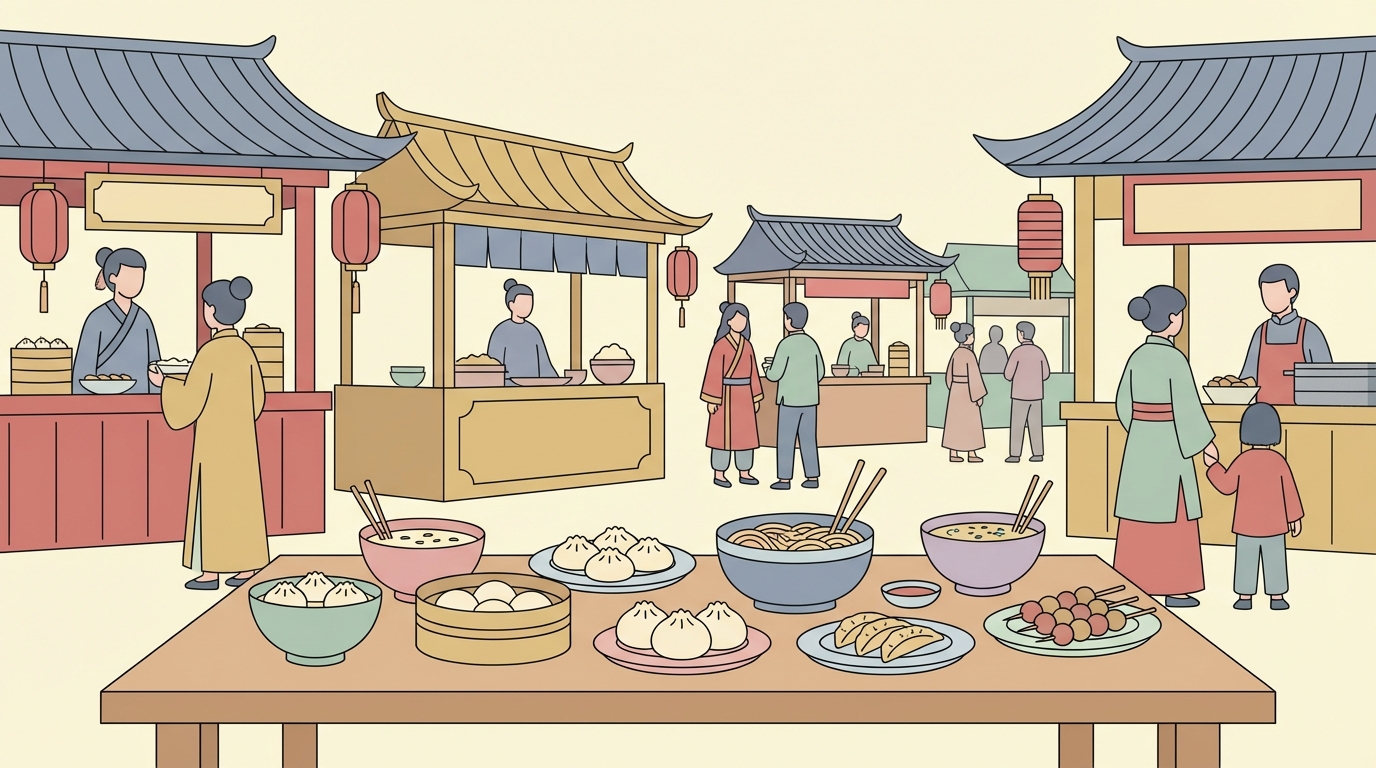
Street food in China is safe, cheap, and delicious. Most items cost 5-15 RMB (50p-£1.50). Look for stalls with a long queue of locals. That is the best quality signal. Jianbing (a savoury crepe) is a breakfast staple in the north. Chuan’r (lamb skewers) are a classic evening snack, grilled over charcoal and dusted with cumin and chilli. In Xi’an, try the Muslim Quarter for lamb burgers and flatbread. In Chengdu, the night markets are full of skewers, tofu, and dumplings. Carry small bills. Do not assume every stall takes mobile payments. Street food is best eaten immediately, so plan to eat as you walk.
Food Markets Worth Exploring
For a deeper dive, visit a food market. The best ones are wet markets, where vendors sell raw ingredients, not just prepared food. You will see live seafood, unusual vegetables, and spices you have never heard of. Go early in the morning. The crowd is local, and the energy is high. Do not eat at the market itself. Instead, buy a few ingredients and ask a nearby restaurant to cook them. This is called “bring your own catch” and is common in coastal cities. It costs the restaurant a small cooking fee, often under 20 RMB (£2). It is the most authentic meal you will have.