Plan Ahead for Lunch, Not Dinner
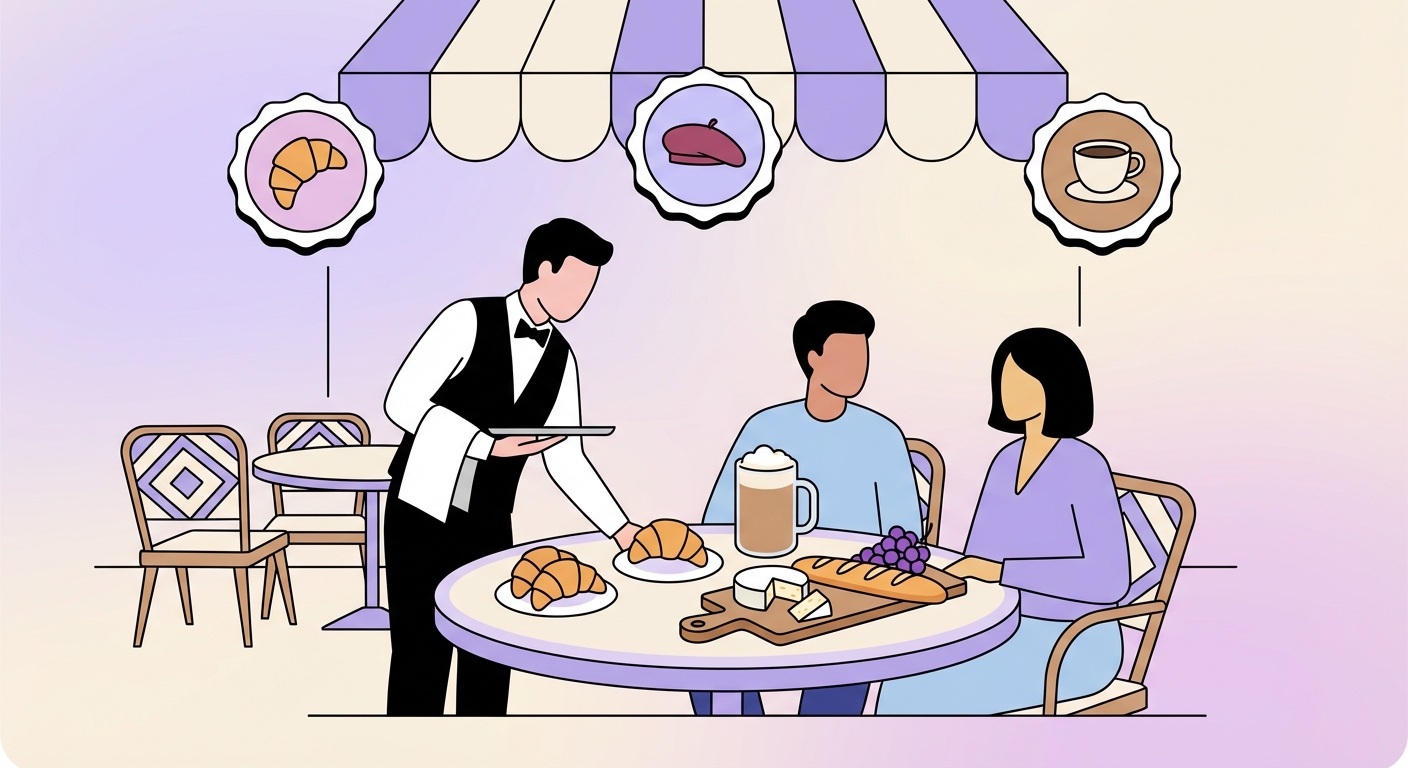
Most French restaurants serve lunch between 12:00 and 14:00 and dinner from 19:00 to 21:30. If you arrive at 15:00 expecting a full meal, you will likely find kitchens closed and only a limited menu of sandwiches or salads. The solution is to plan your main meal at midday. Lunch menus are often half the price of dinner and include a starter, main course, and dessert. For evening eating, reserve a table at a brasserie or bistro that serves continuously, or rely on street food and bakeries for a flexible schedule.
well-known French Dishes and Street Food No Visitor Should Skip
France’s culinary reputation rests on dishes that vary by region. In Paris, a classic croque monsieur - a grilled ham and cheese sandwich with béchamel sauce - is a reliable lunch option. Look for it in cafés rather than tourist-heavy spots near monuments. A crêpe made from buckwheat flour (galette) is the go-to street food in Brittany. Fillings range from ham and egg to goat cheese and walnuts. Avoid the sweet Nutella crêpe sold at tourist stalls; it is not traditional and often overpriced. In Marseille, bouillabaisse is a saffron-scented fish stew served with rouille sauce and croutons. Order it only in a restaurant that requires 24-hour notice - that signals it is made with fresh local fish.
Bread, Cheese, and the Art of the Picnic
A baguette from a local boulangerie costs about 1 euro and is best eaten within two hours of purchase. Pair it with a small wedge of Comté or Brie from a fromagerie. Ask for a cheese that is “à point” - at peak ripeness. For a picnic, buy a pâté en croûte or a quiche Lorraine from a traiteur (deli). These travel well and require no utensils. Avoid pre-packaged supermarket cheese; the texture and flavor are noticeably inferior. A 10-euro picnic of bread, cheese, pâté, and a small bottle of cider or mineral water can replace a restaurant meal and lets you eat anywhere - a park bench, a riverbank, or a train platform.
Regional Specialties: From Brittany to Nice
Each region demands its own food strategy. In Brittany, order a galette complète (buckwheat crêpe with ham, egg, and cheese) and drink a bowl of cidre brut - dry cider served in a ceramic cup. Do not ask for sweet cider with a savory galette. In Nice, a socca - a chickpea-flour pancake cooked in a copper pan - is sold from street stalls in the old town. Eat it hot, drizzled with olive oil and black pepper. In the Alps, fondue savoyarde is a shared pot of melted cheese (Comté, Beaufort, Emmental) with bread cubes. Restaurants often charge a supplement for extra bread or potatoes, so check the menu before ordering. In Marseille, panisse (fried chickpea polenta sticks) are sold from food trucks near the Vieux-Port. They are cheap, filling, and vegetarian.
Street Food and Quick Eats: Practical Choices
For a fast, affordable meal, look for a crêperie in Brittany or a boulangerie anywhere for a sandwich jambon-beurre - ham and butter on a baguette. It costs 4-6 euros and is the most authentic quick lunch in France. In Paris, falafel stands in the Marais district serve pita stuffed with fried chickpea balls, eggplant, and tahini. The line at a famous shop on Rue des Rosiers moves fast, and the price (around 8 euros) is a bargain for a full meal. Avoid kebabs sold near major train stations; quality varies widely. For a sweet treat, a canelé from Bordeaux - a small, caramelized custard pastry - is portable and less sweet than a macaron. Buy it from a dedicated canelé shop, not a supermarket.
Drinks and Timing: What to Order and When
Wine by the glass is cheaper and more common at lunch than dinner. A pichet (carafe) of house wine at a bistro is often the best value. For non-alcoholic options, order sirop à l’eau - fruit syrup mixed with still or sparkling water. It costs 2-3 euros and is widely available. Coffee is always an espresso; a café crème is a larger, milkier version. Do not order a cappuccino after a meal - it is seen as a breakfast drink. In Nice, a limonade (lemon soda) is refreshing but often served without ice. If you want ice, ask for “des glaçons à part.”
One Clear Recommendation
If you have time for only one food experience, eat a galette complète with a bowl of dry cider in a small crêperie in Brittany. It is affordable (under 15 euros), regionally authentic, and requires no reservation. It also teaches you the French principle that a simple dish made with good ingredients is better than a complicated one made with shortcuts.