The One Mistake Almost Every Visitor Makes
The most common practical mistake travellers make in Spain is eating dinner at 7 or 8 p.m. Spanish lunch is between 1:30 and 3:30 p.m., and dinner rarely starts before 9 p.m. If you show up at a restaurant at 7 p.m., the kitchen will be closed, and the tables will be empty. Plan your day so your big meal is lunch, then have a light dinner after 9 p.m. Many bars serve free or cheap tapas with a drink during the earlier evening hours, but that is a snack, not a full dinner.
How Spanish Meals Really Work
Spain has a rhythm you need to follow. Breakfast is small: coffee with a pastry or toast with tomato and olive oil. The mid-morning snack at 11 a.m. is common, often a small sandwich or a piece of tortilla de patatas. Lunch is the main meal, with multiple courses. A menú del día is a fixed-price lunch menu offered by nearly every restaurant. It includes a starter, a main course, bread, a drink, and sometimes dessert. Prices range from 12 to 18 euros in most cities. This is the best value in Spain.
Dinner is lighter. Many locals eat a salad, a bowl of soup, or a few tapas. If you want a full dinner, look for restaurants that open at 8:30 p.m. but expect the crowd to arrive closer to 9:30 p.m. Reservations are wise for popular places.
well-known Dishes You Must Try
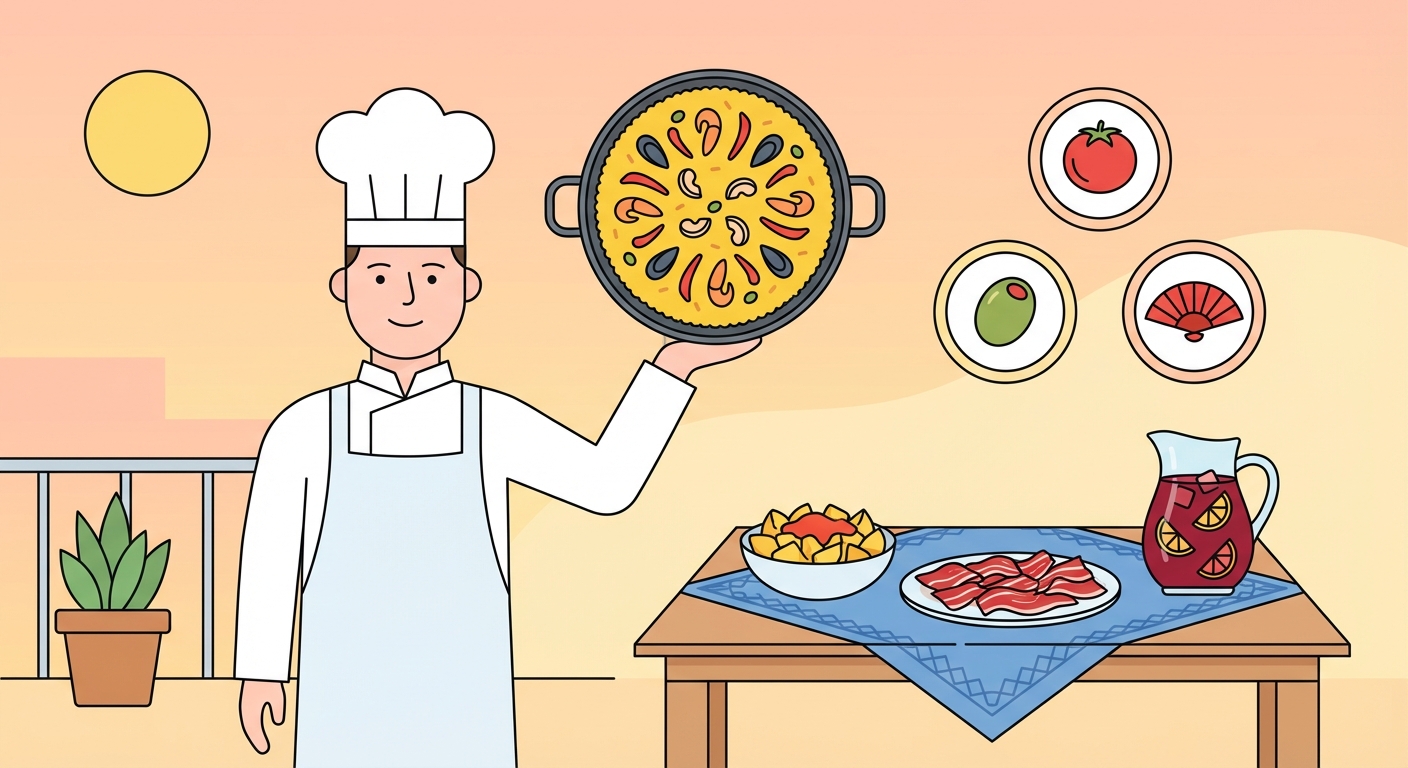
- Paella - The most famous Spanish dish. Authentic paella comes from Valencia, where it is cooked over an open fire with rabbit, chicken, or seafood, and always with bomba rice. Avoid the tourist paella served in giant pans near the beach. For the real thing, book a lunch at a restaurant in Valencia's Malvarrosa neighbourhood or in a local's home. Paella is a lunch dish only.
- Gazpacho - A cold tomato and vegetable soup from Andalusia. It is not a sauce or a dip. It is a refreshment served in a glass or bowl, perfect for hot afternoons. Order it in Seville or anywhere in the south. Avoid the bottled supermarket versions.
- Tortilla de patatas - A thick potato omelette, served at room temperature. Good tortilla is juicy inside and browned outside. Ask for it on bread or alone. It appears at every tapas bar.
- Jamón ibérico - Cured ham from acorn-fed pigs. The best grade is jamón ibérico de bellota. It is expensive but worth trying once. Order a plate from a specialist bar.
Tapas: How to Order Without Confusion
Tapas are small dishes, not a type of food. In most of Spain, you order a drink and the bar brings a small tapa for free. This is called a tapa de cortesía. In cities like Granada and León, this is standard. In Madrid and Barcelona, you usually pay for each tapa separately. In San Sebastián, the local term is pintxo, and you eat them standing at the bar, paying by the toothpick count. A typical pintxo costs 3 to 5 euros. Two or three pintxos plus a small drink make a light meal.
Trade-off: Free tapas are small and simple. Paid tapas are larger and more elaborate. If you are hungry, order two or three pintxos or raciones (half-portions). If you are on a budget, stick to the free tapa bars in the south.
Drinks: Wine, Cava, and the Right Order
- Vino tinto - Red wine. Spain has many regions. Rioja is the most famous and reliable. Order a crianza for a balanced, affordable red.
- Vino blanco - White wine. Rías Baixas from Galicia is crisp and mineral. Good with seafood.
- Cava - Sparkling wine from Catalonia. It is the local alternative to Champagne. Order a brut nature for dry taste.
- Agua de Valencia - A cocktail of cava, orange juice, vodka, and gin. Only order this in Valencia itself. It is not a typical Spanish drink.
One clear recommendation: For your first meal, find a restaurant with a menú del día around 2 p.m. Order the local speciality, drink a small glass of wine, and finish with coffee. This will cost about 15 euros and give you the true Spanish lunch experience. Avoid any place that offers a "tourist menu" with photos of the food.
Regional Differences You Should Know
Spain is not one cuisine. The north is known for seafood, pintxos, and creamy cheeses. The south uses olive oil, garlic, and vegetables. The east, around Valencia, makes rice dishes. The centre of the country specializes in roasted meats and stews. Do not order paella in San Sebastián or gazpacho in Madrid. Each region has its own pride. Ask the waiter what the local dish is. That is the meal you should order.