Start with Delhi, Not Agra
Most itineraries begin at the Taj Mahal. Do the reverse. Fly into Delhi and spend two days there first. This avoids the worst of the jet lag shock and lets you adjust to India's pace before tackling the crowds at Agra. Delhi's metro system is efficient for reaching the major sights. Use the city as your base for the Red Fort and the India Gate. The Red Fort requires at least half a day. Arrive when it opens at sunrise to avoid the midday heat and the long queues. The India Gate is best visited in the late afternoon when locals gather. Walk the full perimeter. It takes about 20 minutes at a steady pace.
The Taj Mahal: Timing and Trade-Offs
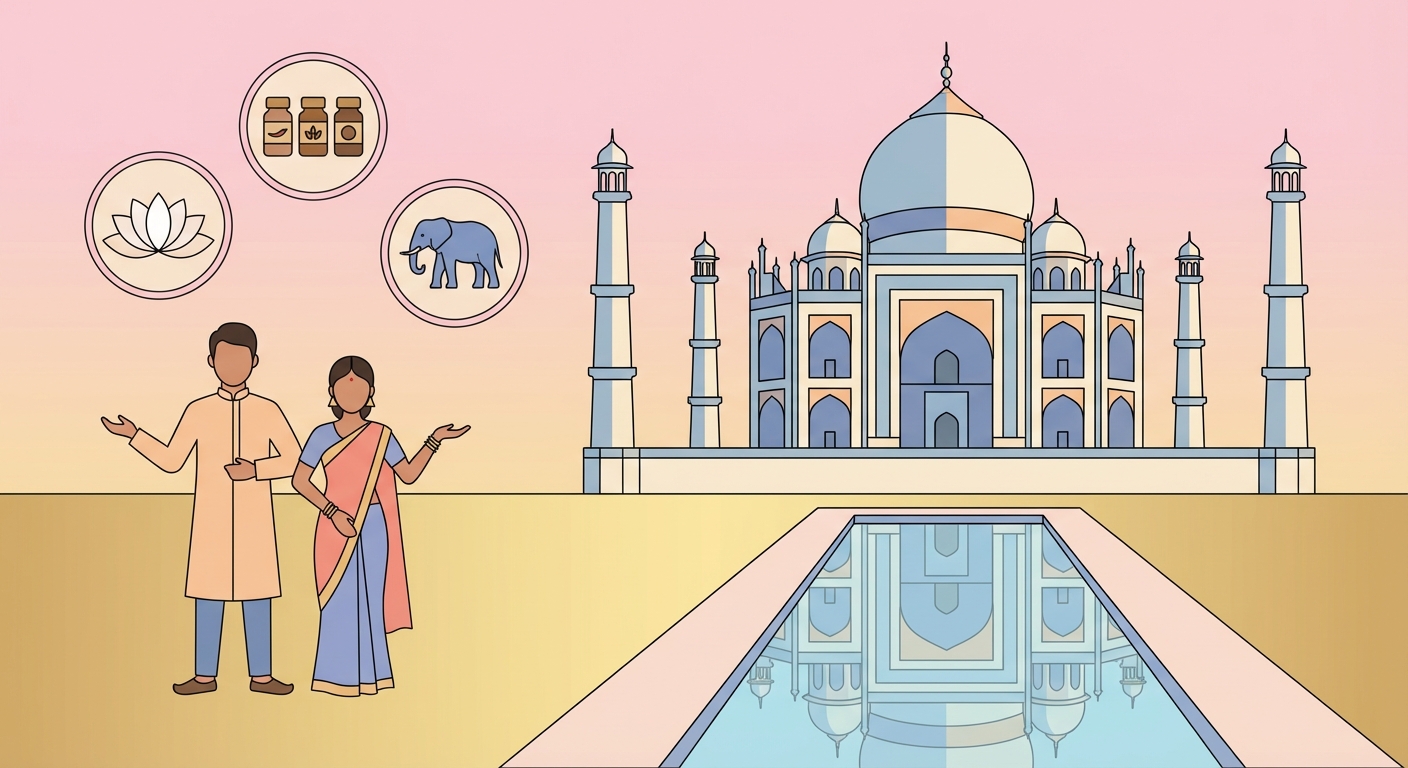
Take the Shatabdi Express train from Delhi to Agra. It departs at 6:00 AM and arrives by 8:00 AM. Book a seat in the executive class for the best balance of comfort and cost. The Taj Mahal is a UNESCO World Heritage Site. It was built by Emperor Shah Jahan as a mausoleum for his wife. It is one of the Seven Wonders of the World. Go at sunrise. The marble changes color as the light shifts. By 10:00 AM the crowds are thick and the heat is oppressive. Plan to exit by 11:00 AM. Do not try to see the Taj and the Agra Fort in the same morning. Pick one. If you choose the fort, you gain a different perspective: you can see the Taj from across the river. But you lose the close-up detail of the inlay work. My clear recommendation is the Taj first, the fort on a separate trip.
Essential Tips for Agra and Delhi
- Buy your Taj Mahal ticket online at least two days in advance. The on-site ticket booth has long lines.
- Leave your backpack at the hotel. Security at the Taj does not allow large bags inside the grounds. You will have to pay for a locker.
- Carry a reusable water bottle. Filtered water refill stations are scarce. Buy sealed bottles from a pharmacy, not from street vendors.
- In Delhi, hire a government-approved guide for the Red Fort. The official guides wear a badge and charge a fixed rate. Unofficial guides will approach you at the gate. Decline them.
Beyond the Mughal Circuit
If you have a third day, skip the standard Jaipur loop and go to Varanasi instead. It is a direct overnight train from Delhi. Varanasi offers a completely different India: the ghats along the Ganges, the evening aarti ceremony, and the narrow lanes of the old city. It is not a comfortable destination. The noise and the crowds are constant. But it provides a contrast that the Mughal monuments cannot. Stay in a hotel near Dashashwamedh Ghat. Wake before 5:00 AM to see the sunrise boat ride. That single hour justifies the journey.
Practical Choices and Real Costs
India requires patience. Budget for a good hotel in Delhi and Agra. A mid-range room with air conditioning and attached bathroom costs about 4,000 to 6,000 rupees per night. The train from Delhi to Agra costs 1,000 rupees per person in executive class. The Taj Mahal entry fee is 1,100 rupees for foreign tourists. The Red Fort is 600 rupees. Carry small bills. Many vendors and rickshaw drivers cannot make change for a 500-rupee note. Download a ride-hailing app before you arrive. It works better than hailing a taxi on the street. Do not drink tap water. Do not eat raw vegetables from street stalls. These are not warnings to scare you. They are the minimum requirements for a trip that stays on schedule.