


1 GB / 7 days
Best for: A short visit with maps, messages and occasional browsing.
This option pairs the 1 GB allowance with a stated validity period of 7 days.
Usage tip: Save maps before longer journeys and use Wi-Fi for large downloads.
* The "as low as" figure is the lowest per-day rate, taken from the longest unlimited data plan on sale here.
Here's how Onetel stacks up against other options in Libya.
Prices shown in USD
1 GB for 7 days in Libya costs $16.54 — about $2.36 a day on Al-Madar Al-Jadid or Libyana, with no roaming charge and no SIM to swap.
Choose your Libya eSIM by matching the allowance and validity period to your trip, then compare the selected product details with the local network, band and speed references already shown on this page.
Start with the length of your stay, then allow for navigation, messaging, streaming and work use. Each option below is a plan size that is currently available for this destination.
Best for: A short visit with maps, messages and occasional browsing.
This option pairs the 1 GB allowance with a stated validity period of 7 days.
Usage tip: Save maps before longer journeys and use Wi-Fi for large downloads.

Best for: A stay of around two weeks with regular navigation and messaging.
The 3 GB allowance remains available across a stated validity period of 15 days.
Usage tip: Keep automatic app updates and cloud backups on Wi-Fi.
Best for: A longer stay or more frequent streaming, video calls or work use.
The 10 GB or more / 30 days profile provides a larger data pool than the short-trip options on this page.
Usage tip: Compare the allowance with your normal phone usage and monitor it during the trip.
Your eSIM roams onto Libya's own operators. These are the networks and the frequencies they run — check your phone supports them before you travel.
Mobile coverage is concentrated along the Mediterranean coast and in urban areas; large areas of the Sahara interior have no service from any operator.
The Libya mobile network source is linked below as a public network reference. Check the places on your itinerary where the source offers local detail, then confirm the network information for the selected eSIM product. The operator table on this page provides the country-level reference, while the selected product details identify which network information applies to your plan.
Check your accommodation and the places you expect to visit in Libya. Indoor reception can differ from an outdoor map, so keep the property Wi-Fi details available as well.
Review the full route rather than checking only the arrival city. Save tickets, addresses and maps offline before longer road or rail journeys.
Check the selected product scope for every country on your itinerary. Your Libya plan and a regional plan may have different included destinations and validity periods.
Compare your phone with 4G bands B1, B3 in the existing Libya network table. Support for more of the listed bands gives the phone more options when connecting, while the selected product, location and local network conditions determine the service available.
Keep the QR code and installation instructions available offline, and complete each step according to the selected product's instructions.
When validity starts: Validity-start rules can differ by product. Check the selected plan details before installation and travel.
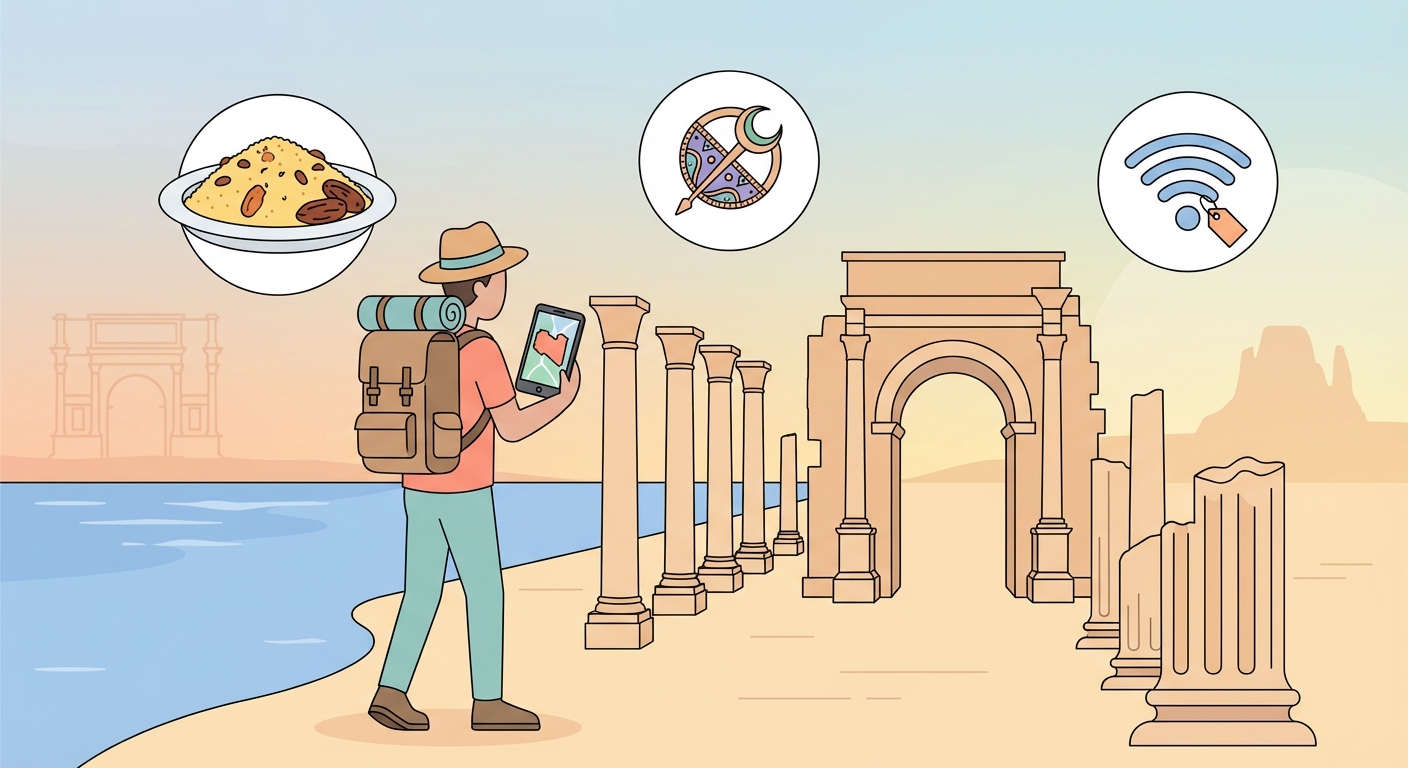
Libya offers a mix of North African, Roman, Saharan, and Mediterranean experiences. From the well-preserved Roman ruins of Leptis Magna to the winding alleys of Tripoli’s old city, the country rewards travellers who plan carefully. The Sahara Desert provides a stark contrast to the coastal cities. Libyan hospitality is genuine, but you should respect local customs, especially during prayer times and Ramadan. Dress modestly, covering shoulders and knees, and always ask before photographing people. English is not widely spoken outside tourist sites, so learning a few Arabic phrases helps. Cash is king; credit cards are rarely accepted. Check your embassy’s travel advice before visiting, as security conditions can change. Arrange transport and accommodation in advance through a reputable local guide or tour operator.
Libya’s attractions span Roman history, Saharan landscapes, and traditional Berber towns. Choose based on your interests and travel time.
Libyan food blends Mediterranean and North African influences with Berber, Arab, and Italian touches. Portions are generous, and meals are often shared. Try these dishes:
Libya’s climate varies greatly between the coast and the desert. The best time to visit the Mediterranean coastal cities, including Tripoli and Leptis Magna, is between November and March. During these months, daytime temperatures range from 15°C to 20°C, making sightseeing comfortable. Summer months from June to September can be very hot, often exceeding 35°C, and humidity is high along the coast. For the Sahara Desert, plan trips between October and April. Daytime temperatures in the desert are pleasant, but nights can drop to near freezing. Avoid the desert in summer, when heat is extreme and dangerous. Spring and autumn offer a good balance for both regions, though sandstorms can occur. Check local conditions before booking, as weather patterns can shift.
Libya’s Saharan and Mediterranean climates require careful packing. Prepare for strong sun, dust, and variable temperatures. These items are essential:
The details worth knowing about your Libya eSIM
Live chat and email are staffed the whole way through — before you fly and while you're abroad. Replies typically land in under 2 minutes.
Talk to us
Browse eSIM plans for more countries worldwide.