


1 GB / 7 days
Best for: A short visit with maps, messages and occasional browsing.
This option pairs the 1 GB allowance with a stated validity period of 7 days.
Usage tip: Save maps before longer journeys and use Wi-Fi for large downloads.
* The "as low as" figure is the lowest per-day rate, taken from the longest unlimited data plan on sale here.
Here's how Onetel stacks up against other options in Namibia.
Prices shown in USD
5 days of unlimited data in Namibia costs $327.26 — about $65.45 a day on MTC Namibia or Telecom Namibia (TN Mobile), with no roaming charge and no SIM to swap. In Namibia, 5G is live and median mobile download speed is 17.6 Mbps.
Choose your Namibia eSIM by matching the allowance and validity period to your trip, then compare the selected product details with the local network, band and speed references already shown on this page.
Start with the length of your stay, then allow for navigation, messaging, streaming and work use. Each option below is a plan size that is currently available for this destination.
Best for: A short visit with maps, messages and occasional browsing.
This option pairs the 1 GB allowance with a stated validity period of 7 days.
Usage tip: Save maps before longer journeys and use Wi-Fi for large downloads.

Best for: A stay of around two weeks with regular navigation and messaging.
The 2 GB allowance remains available across a stated validity period of 15 days.
Usage tip: Keep automatic app updates and cloud backups on Wi-Fi.
Best for: A longer stay or more frequent streaming, video calls or work use.
The 5 GB / 30 days profile provides a larger data pool than the short-trip options on this page.
Usage tip: Compare the allowance with your normal phone usage and monitor it during the trip.
Your eSIM roams onto Namibia's own operators. These are the networks and the frequencies they run — check your phone supports them before you travel.
Source: Ookla Speedtest Global Index, July 2025
Vast areas of the Namib Desert and Skeleton Coast have no mobile coverage from any operator. MTC's 5G network is limited to parts of Windhoek, Swakopmund, and Walvis Bay.
The Namibia mobile network source is linked below as a public network reference. Check the places on your itinerary where the source offers local detail, then confirm the network information for the selected eSIM product. The operator table on this page provides the country-level reference, while the selected product details identify which network information applies to your plan.
Check your accommodation and the places you expect to visit in Namibia. Indoor reception can differ from an outdoor map, so keep the property Wi-Fi details available as well.
Review the full route rather than checking only the arrival city. Save tickets, addresses and maps offline before longer road or rail journeys.
Check the selected product scope for every country on your itinerary. Your Namibia plan and a regional plan may have different included destinations and validity periods.
Compare your phone with 4G bands B1, B3, B8 and 5G bands n78 in the existing Namibia network table. Support for more of the listed bands gives the phone more options when connecting, while the selected product, location and local network conditions determine the service available.
Keep the QR code and installation instructions available offline, and complete each step according to the selected product's instructions.
When validity starts: Validity-start rules can differ by product. Check the selected plan details before installation and travel.
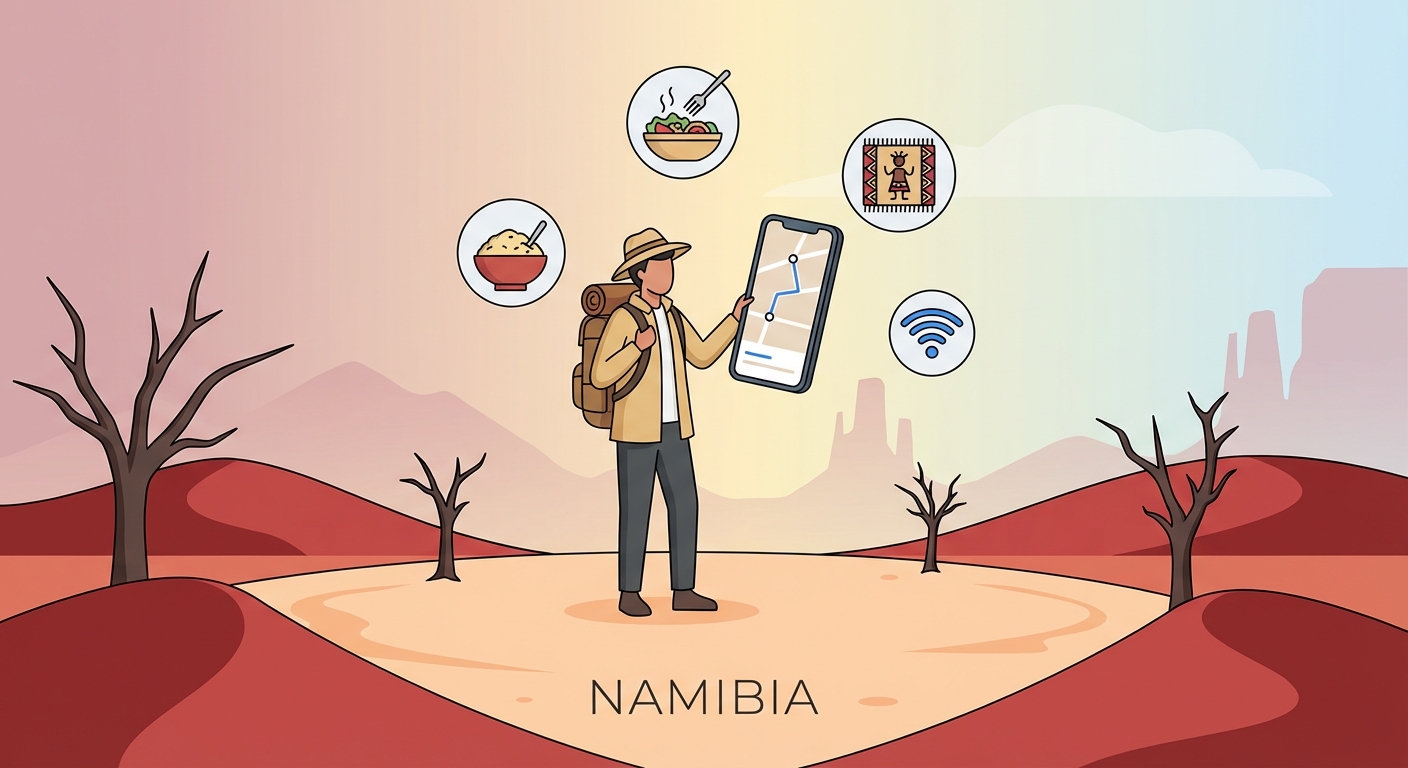
Namibia offers a raw, open landscape that rewards self-reliance and patience. The Atlantic coast brings cool fog in the morning, so carry a light jacket even in summer. From the Namib Desert to Etosha National Park, distances are vast. Drive a sturdy 4x4 and plan fuel stops. Southern African wildlife is best seen at waterholes in the dry winter months. Respect the traditions of San and Himba communities; ask permission before taking photographs. Stay in lodges or campsites that support local conservation. Avoid driving after dark to protect animals and yourself.
Namib Desert - Home to Sossusvlei’s towering red dunes. Arrive at sunrise for the best light and cooler temperatures. Climb Dune 45 or hike to Deadvlei.
Potjiekos - A slow-cooked stew made in a three-legged cast-iron pot over coals. Expect meat, vegetables, and spices. Often served at social gatherings.
Namibia has a dry, sunny climate most of the year. May to September is the dry winter season. Wildlife gathers at permanent waterholes in Etosha and private reserves. Daytime temperatures are mild, but nights can be cold. Pack warm layers for early morning game drives. November to March is the summer rainy season. The landscape turns green, and birdlife is abundant. However, some gravel roads become impassable after heavy rain. April and October are transitional months with fewer crowds and moderate temperatures. December to February is peak tourist season, so book accommodation well in advance.
Namibia’s climate demands careful packing. The African sun is intense year-round. Bring high SPF sunscreen and reapply often. Lightweight, breathable clothing in neutral colors suits both heat and wildlife viewing. A wide-brimmed hat and sunglasses are essential. Sturdy closed-toe hiking boots protect against rough terrain and snakes. Must-haves include binoculars and a camera with a zoom lens for distant animals. Prepare for dust and sudden temperature drops after sunset. A reusable water bottle and basic first aid kit are wise additions. Your uPhone eSIM will keep you connected in remote areas.
The details worth knowing about your Namibia eSIM
Live chat and email are staffed the whole way through — before you fly and while you're abroad. Replies typically land in under 2 minutes.
Talk to us
Browse eSIM plans for more countries worldwide.