



🇵🇭 eSIM plans for Philippines

Starting at $3.59/day*
  • No data caps
  • 7-days valid
  • Fast, reliable connection
  • Skip the roaming bill
  • QR code emailed instantly
Get your unlimited data
How many days
More days, lower daily rate
7
How many eSIMs
More eSIMs, bigger discount
1
Install it now or once you're away. Nothing starts counting until you reach your destination and switch the eSIM on.

* The "as low as" figure is the lowest per-day rate, taken from the longest unlimited data plan on sale here.

Secure Checkout
Visa Mastercard PayPal Amex Diners JCB
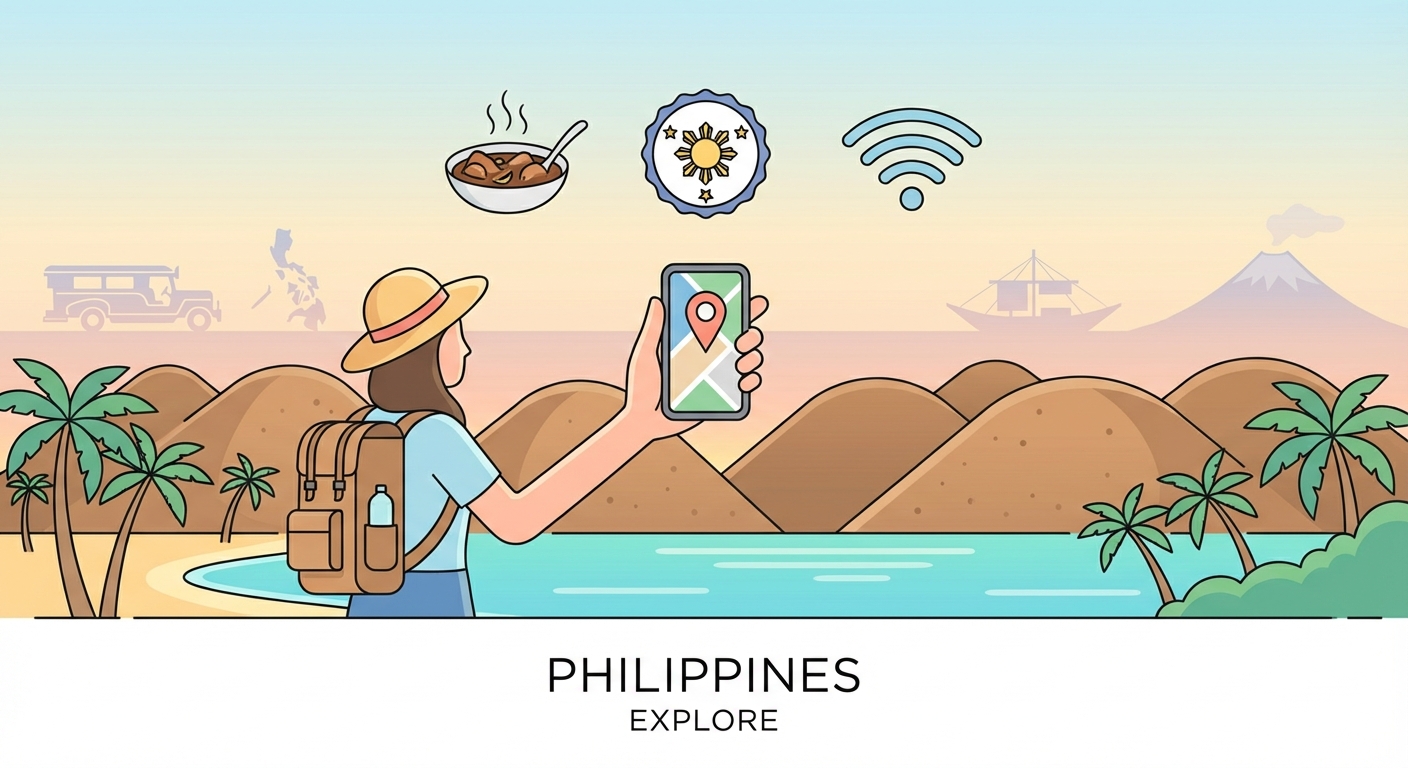
Philippines eSIM travel illustration

Why buy from us?

Here's how Onetel stacks up against other options in Philippines.

Onetel
Local SIM card
Roaming
Uncapped data plans
Activates instantly
Your number stays the same
No surprise charges
No lock-in
24/7 support
Southeast Asia eSIM

Cover the Region with Southeast Asia eSIM

Cover Philippines and every neighboring country on one regional eSIM — no SIM swaps, no extra fees. Starting at $2.16.

View Southeast Asia Plans
🇵🇭

eSIM costs for Philippines

Prices shown in USD

7 days of unlimited data in Philippines costs $28.20 — about $4.03 a day on Globe Telecom, Smart Communications or DITO Telecommunity, with no roaming charge and no SIM to swap. In Philippines, 5G is live and median mobile download speed is 28.8 Mbps.

Duration Price Daily cost
1 day $7.68 $7.68/day
3 days $12.82 $4.27/day
5 days $17.96 $3.59/day
7 days $28.20 $4.03/day
10 days $53.82 $5.38/day
15 days $105.10 $7.01/day
30 days $7.94 $0.26/day
180 days $84.00 $0.47/day
🇵🇭

Which Philippines eSIM plan fits your trip?

Choose your Philippines eSIM by matching the allowance and validity period to your trip, then compare the selected product details with the local network, band and speed references already shown on this page.

Start with the length of your stay, then allow for navigation, messaging, streaming and work use. Each option below is a plan size that is currently available for this destination.

Short trip

1 GB / 7 days

Best for: A short visit with maps, messages and occasional browsing.

This option pairs the 1 GB allowance with a stated validity period of 7 days.

Usage tip: Save maps before longer journeys and use Wi-Fi for large downloads.
Two-week trip

3 GB / 15 days

Best for: A stay of around two weeks with regular navigation and messaging.

The 3 GB allowance remains available across a stated validity period of 15 days.

Usage tip: Keep automatic app updates and cloud backups on Wi-Fi.

Longer or higher use

10 GB or more / 30 days

Best for: A longer stay or more frequent streaming, video calls or work use.

The 10 GB or more / 30 days profile provides a larger data pool than the short-trip options on this page.

Usage tip: Compare the allowance with your normal phone usage and monitor it during the trip.

🇵🇭

Which networks you connect to in Philippines

Your eSIM roams onto Philippines's own operators. These are the networks and the frequencies they run — check your phone supports them before you travel.

Operator 4G / LTE bands 5G bands 5G
Globe Telecom B1, B3, B5, B7, B8, B28, B40, B41 n28, n41, n78 Yes
Smart Communications B1, B3, B5, B7, B8, B28, B40, B41 n28, n41, n78 Yes
DITO Telecommunity B1, B3, B5, B28, B34, B40, B41 n78 Yes
28.8 Mbps
Median download
8.8 Mbps
Median upload

Source: Ookla Speedtest Global Index, July 2025

Coverage in Philippines

B28 (700 MHz) is widely used for rural and indoor coverage; some foreign phones lack B28. DITO Telecommunity has no 3G or 2G network, only 4G and 5G.

How to check mobile coverage in Philippines

The Philippines mobile network source is linked below as a public network reference. Check the places on your itinerary where the source offers local detail, then confirm the network information for the selected eSIM product. The operator table on this page provides the country-level reference, while the selected product details identify which network information applies to your plan.

Accommodation and daily stops

Check your accommodation and the places you expect to visit in Philippines. Indoor reception can differ from an outdoor map, so keep the property Wi-Fi details available as well.

Journeys between stops

Review the full route rather than checking only the arrival city. Save tickets, addresses and maps offline before longer road or rail journeys.

Borders and onward travel

Check the selected product scope for every country on your itinerary. Your Philippines plan and a regional plan may have different included destinations and validity periods.

Phone compatibility in Philippines

Compare your phone with 4G bands B1, B3, B5, B7, B8, B28, B34, B40, B41 and 5G bands n28, n41, n78 in the existing Philippines network table. Support for more of the listed bands gives the phone more options when connecting, while the selected product, location and local network conditions determine the service available.

Set up the Philippines eSIM for your trip

Keep the QR code and installation instructions available offline, and complete each step according to the selected product's instructions.

When validity starts: Validity-start rules can differ by product. Check the selected plan details before installation and travel.

  1. Confirm that your phone is unlocked and supports eSIM before purchase.
  2. Save the QR code or manual installation details somewhere you can reach without mobile data.
  3. Use reliable Wi-Fi to install the profile at the time recommended in the product instructions.
  4. When you are ready to use it, select the travel eSIM for cellular data and apply the stated roaming and APN settings.
  5. Keep roaming disabled on your home line if you want to avoid using its travel data.
Network and coverage sources, checked 2026-10-10
Philippines travel guide

Enjoy Your Stay in the Philippines

The Philippines is an archipelago of over 7,600 islands. Filipino is the national language, but English is widely spoken in cities and tourist areas. From the striking rice terraces of the Cordillera to the limestone karsts of Palawan, the country offers diverse landscapes. Stay alert for weather changes, especially during typhoon season from June to October. Manila and Cebu are major gateways with international airports, but consider flying directly to smaller islands like Palawan or Boracay to save time. Use a waterproof bag for island-hopping trips, as boat transfers can be wet. Always carry cash, as many small sari-sari stores and tricycle drivers do not accept cards.

Top Attractions to See

Famous attractions are spread across the islands, so plan your route carefully.

  • Boracay Island - Known for White Beach. Book ahead during peak season (December to May) to avoid crowds.
  • Palawan Underground River - A UNESCO World Heritage Site. Arrive early to secure a boat tour slot.
  • Chocolate Hills - Located on Bohol. The best view is from the Carmen viewpoint at sunrise.
  • Intramuros, Manila - The historic walled city. Take a guided walking tour or rent a bamboo bike.
  • Banaue Rice Terraces - Often called the Machu Picchu of the Philippines. The ancient Ifugao terraces are best seen from December to April when the paddies are green.

Unique experiences include the whale shark watching in Oslob, Cebu, but consider ethical operators that limit interaction time.

Filipino Foods to Try

Filipino cuisine blends Malay, Spanish, and Chinese influences. Stick to these highlights for a safe and rewarding taste of the country.

  • Adobo - A stew of meat (chicken or pork) marinated in vinegar, soy sauce, garlic, and bay leaves. Look for it in carinderias (local eateries) for an authentic version.
  • Sinigang - A sour tamarind-based soup with fish, shrimp, or pork. It is refreshing on hot days.
  • Lumpia - A spring roll filled with vegetables or meat. Fresh lumpia is a lighter option.
  • Lechon - A whole roasted pig, especially famous in Cebu. The skin is crispy and seasoned with liver sauce.
  • Halo-Halo - A shaved ice dessert with evaporated milk, sweet beans, coconut, and toppings. Avoid drinking tap water; stick to bottled or boiled drinks.

Be cautious with street food if you have a sensitive stomach. Choose stalls with high turnover.

Best Time to Visit

The Philippines has a tropical climate with two main seasons: dry and wet. The best time to visit most areas is during the dry season, which runs from November to May. This period offers sunny days and calm seas, ideal for beach activities and island-hopping. December to February are the coolest and most comfortable months, especially in northern Luzon. Typhoons are most likely from June to October, with August and September being peak risk months. If you travel during the wet season, plan for flexible itineraries and check weather updates daily. The transition months of May and September can offer good weather with fewer tourists.

What to Pack

Pack for humidity, sun, and sudden rain. Lightweight, breathable clothing in natural fibers like cotton or linen is best. Quick-dry fabrics are useful for island trips. Bring high SPF sunscreen (SPF 50+ recommended) and reapply often, as the UV index is intense year-round. Water shoes or reef sandals are essential for rocky beaches and coral areas. A waterproof bag or dry bag protects electronics and documents during boat transfers and sudden downpours. A lightweight rain jacket or poncho covers you during unexpected showers. Do not forget a swimsuit and a hat for sun protection. Your uPhone eSIM can be activated before departure to avoid roaming charges.

Common Questions

The details worth knowing about your Philippines eSIM

Your eSIM connects to Globe, Smart, and DITO networks. Globe and Smart have extensive 4G and 5G coverage nationwide, including rural areas. DITO is newer and lacks 3G or 2G, so if you lose 4G or 5G signal, you will have no fallback on that network.

Yes, the 700 MHz band (B28) is widely used for rural and indoor coverage. Many foreign phones, especially older US and European models, lack B28 support. Without it, you may have weaker signal inside buildings and in provincial areas, though cities should still work on other bands.

It works on the major islands served by Globe and Smart, including Palawan and Boracay. Coverage drops quickly once you are more than a few kilometres offshore. The eSIM does not cover neighbouring countries — it stops at the Philippine border. No roaming to Taiwan, Malaysia, or Indonesia is included.

No content filtering or throttling is applied by the eSIM provider. However, the local networks may deprioritise roaming traffic during congestion, which can slow speeds below the median 28.84 Mbps. Video streaming and large downloads may be slower during peak hours in busy areas.

No. eSIMs sold to travellers are pre-registered under the provider's licence. You do not need to show your passport or register your identity. This is different from physical SIM cards bought locally, which require mandatory registration under Philippine law.

Compare 1 GB / 7 days, 3 GB / 15 days and 10 GB or more / 30 days. Use the shorter profiles for lighter maps and messaging use, then compare the larger allowance for streaming, video calls or work apps.

The start rule is product-specific. Review the selected plan details before installing it so you know whether any action is required before arrival.

Save the QR code, manual installation details, APN guidance and the support instructions supplied with the selected plan.
24/7 Support

Stuck? Talk to a human.

Live chat and email are staffed the whole way through — before you fly and while you're abroad. Replies typically land in under 2 minutes.

Talk to us
Onetel customer support