




🇺🇬 eSIM plans for Uganda

Starting at $14.03/day*
  • No data caps
  • 7-days valid
  • Fast, reliable connection
  • Skip the roaming bill
  • QR code emailed instantly
Get your unlimited data
How many days
More days, lower daily rate
7
How many eSIMs
More eSIMs, bigger discount
1
Install it now or once you're away. Nothing starts counting until you reach your destination and switch the eSIM on.

* The "as low as" figure is the lowest per-day rate, taken from the longest unlimited data plan on sale here.

Secure Checkout
Visa Mastercard PayPal Amex Diners JCB
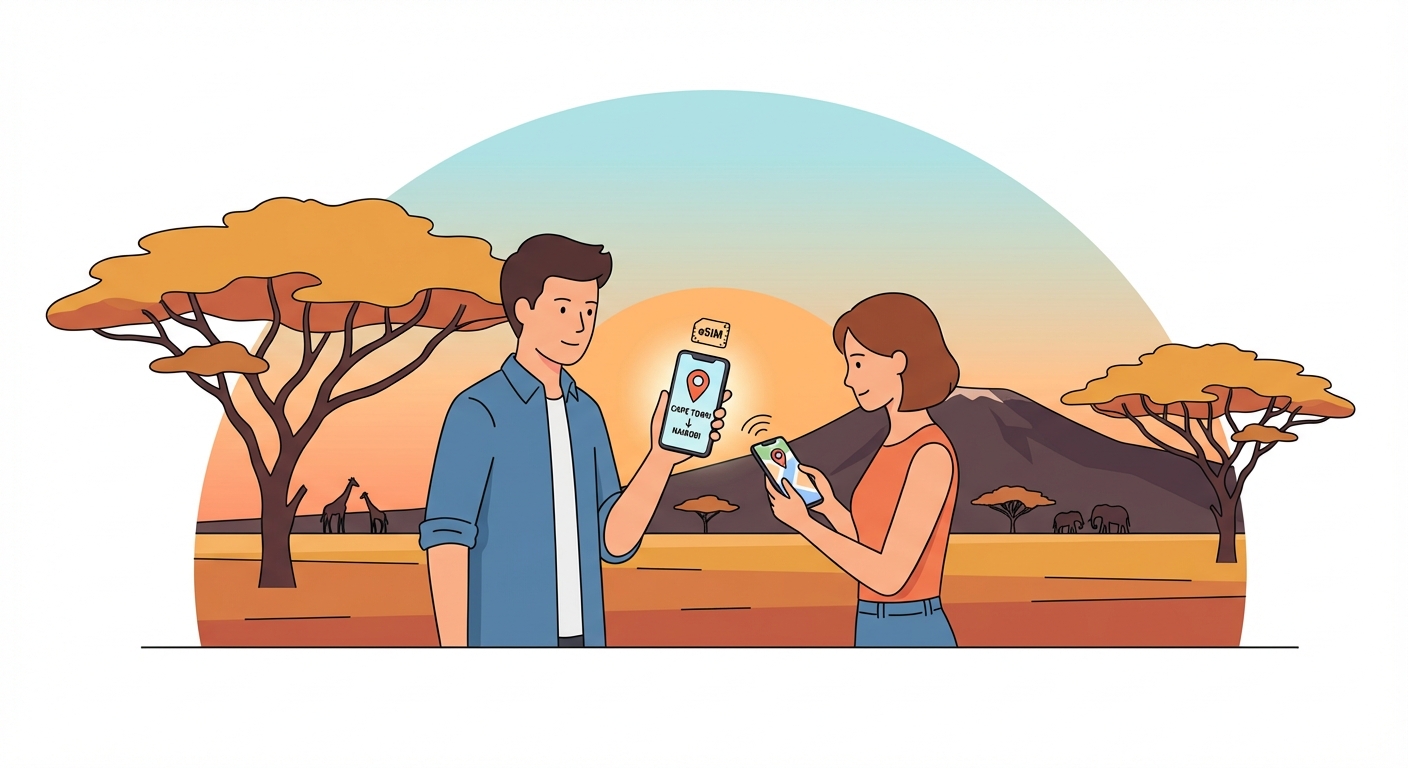
Uganda eSIM travel illustration

Why buy from us?

Here's how Onetel stacks up against other options in Uganda.

Onetel
Local SIM card
Roaming
Uncapped data plans
Activates instantly
Your number stays the same
No surprise charges
No lock-in
24/7 support
Africa eSIM

Cover the Region with Africa eSIM

Cover Uganda and every neighboring country on one regional eSIM — no SIM swaps, no extra fees. Starting at $1.71.

View Africa Plans
🇺🇬

eSIM costs for Uganda

Prices shown in USD

7 days of unlimited data in Uganda costs $98.80 — about $14.11 a day on MTN Uganda or Airtel Uganda, with no roaming charge and no SIM to swap. In Uganda, 5G is live and median mobile download speed is 16.8 Mbps.

Duration Price Daily cost
1 day $15.10 $15.10/day
3 days $43.00 $14.33/day
5 days $70.90 $14.18/day
7 days $98.80 $14.11/day
10 days $140.66 $14.07/day
15 days $210.42 $14.03/day
30 days $24.34 $0.81/day
🇺🇬

Which Uganda eSIM plan fits your trip?

Choose your Uganda eSIM by matching the allowance and validity period to your trip, then compare the selected product details with the local network, band and speed references already shown on this page.

Start with the length of your stay, then allow for navigation, messaging, streaming and work use. Each option below is a plan size that is currently available for this destination.

Short trip

1 GB / 7 days

Best for: A short visit with maps, messages and occasional browsing.

This option pairs the 1 GB allowance with a stated validity period of 7 days.

Usage tip: Save maps before longer journeys and use Wi-Fi for large downloads.
Two-week trip

3 GB / 15 days

Best for: A stay of around two weeks with regular navigation and messaging.

The 3 GB allowance remains available across a stated validity period of 15 days.

Usage tip: Keep automatic app updates and cloud backups on Wi-Fi.

Longer or higher use

10 GB or more / 30 days

Best for: A longer stay or more frequent streaming, video calls or work use.

The 10 GB or more / 30 days profile provides a larger data pool than the short-trip options on this page.

Usage tip: Compare the allowance with your normal phone usage and monitor it during the trip.

🇺🇬

Which networks you connect to in Uganda

Your eSIM roams onto Uganda's own operators. These are the networks and the frequencies they run — check your phone supports them before you travel.

Operator 4G / LTE bands 5G bands 5G
MTN Uganda B1, B3, B8, B20 n78 Yes
Airtel Uganda B1, B3, B8, B20 n78 Yes
16.8 Mbps
Median download
9.0 Mbps
Median upload

Source: Ookla Speedtest Global Index, July 2025

Coverage in Uganda

MTN Uganda and Airtel Uganda 5G limited to central business districts of Kampala and Entebbe; rural areas in Karamoja and parts of northern Uganda have only 2G/3G service or no coverage. B20 (800 MHz) is used by both major operators for rural LTE coverage and is absent from many North American phone models.

How to check mobile coverage in Uganda

The Uganda mobile network source is linked below as a public network reference. Check the places on your itinerary where the source offers local detail, then confirm the network information for the selected eSIM product. The operator table on this page provides the country-level reference, while the selected product details identify which network information applies to your plan.

Accommodation and daily stops

Check your accommodation and the places you expect to visit in Uganda. Indoor reception can differ from an outdoor map, so keep the property Wi-Fi details available as well.

Journeys between stops

Review the full route rather than checking only the arrival city. Save tickets, addresses and maps offline before longer road or rail journeys.

Borders and onward travel

Check the selected product scope for every country on your itinerary. Your Uganda plan and a regional plan may have different included destinations and validity periods.

Phone compatibility in Uganda

Compare your phone with 4G bands B1, B3, B8, B20 and 5G bands n78 in the existing Uganda network table. Support for more of the listed bands gives the phone more options when connecting, while the selected product, location and local network conditions determine the service available.

Set up the Uganda eSIM for your trip

Keep the QR code and installation instructions available offline, and complete each step according to the selected product's instructions.

When validity starts: Validity-start rules can differ by product. Check the selected plan details before installation and travel.

  1. Confirm that your phone is unlocked and supports eSIM before purchase.
  2. Save the QR code or manual installation details somewhere you can reach without mobile data.
  3. Use reliable Wi-Fi to install the profile at the time recommended in the product instructions.
  4. When you are ready to use it, select the travel eSIM for cellular data and apply the stated roaming and APN settings.
  5. Keep roaming disabled on your home line if you want to avoid using its travel data.
Network and coverage sources, checked 2026-10-10
Uganda travel guide

Enjoy Uganda

Uganda, often called the Pearl of Africa, offers a compact but varied travel experience. From the thunderous Murchison Falls to the lush shores of Lake Victoria, the country rewards visitors who plan for both wildlife and scenery. The East African Rift Valley shapes much of the landscape, creating dramatic viewpoints and fertile highlands. Ugandan hospitality is genuine, and English is widely spoken in tourist areas. Carry small Ugandan shilling notes for market purchases and tips. Road conditions vary; allow extra travel time between parks. Always confirm park fees and guide requirements before arrival, as they can change without notice. For a smooth trip, book accommodations and permits well in advance, especially during peak months.

Top Attractions

Uganda is home to several distinct national parks and natural wonders. Choose based on your interests and travel style.

  • Murchison Falls National Park: Witness the Nile River forced through a narrow gorge. Boat safaris offer close views of hippos, crocodiles, and elephants on the riverbanks.
  • Queen Elizabeth National Park: Experience East Africa's classic savannah game drives. The park's Kyambura Gorge and Kazinga Channel are key for spotting lions and large buffalo herds.
  • Bwindi Impenetrable National Park: Trek to see mountain gorillas. Permits are limited and expensive; book at least six months ahead. Be prepared for steep, muddy trails.
  • Rwenzori Mountains: Trek Africa's fabled Mountains of the Moon. This is a multi-day hike for fit travellers; hire a guide and pack cold-weather gear for high-altitude camps.
  • Lake Victoria: Relax on the world's largest tropical lake. Focus on the Entebbe and Jinja areas for water sports and lakeside accommodation.

Local Foods to Try

Ugandan cuisine is hearty and based on staples like plantains, maize, and beans. Try these dishes without hesitation.

  • Matoke: Steamed green plantains mashed into a starchy side. Often served with groundnut sauce or meat stew. It is a filling base for any meal.
  • Posho (Ugali): A thick maize porridge, similar to polenta. Eat it with vegetable relishes or as a breakfast cereal with milk and sugar.
  • Groundnut Sauce: A creamy, savoury sauce made from peanuts. It is poured over rice, posho, or matoke. Ask for it on the side if you prefer mild flavours.
  • Chapati: A soft, thin flatbread introduced by Indian communities. It is common in towns and pairs well with curries or stews.

Street food is widely available but choose stalls with high turnover. Drink only bottled or boiled water. Vegetarians will find many bean and vegetable options at local eateries.

Best Time to Visit

Uganda's equatorial climate means no extreme cold, but rain patterns matter. The main dry seasons run from June to August and from January to February. These months offer the best game viewing in savannah parks because animals gather around water sources. Visibility in Bwindi Impenetrable National Park is clearest in these windows. March to May and September to November are wetter, with afternoon showers. Trails become slippery, and some roads may be impassable. However, the landscape is lush and birding is excellent. Gorilla trekking is possible year round, but you will get wetter in the rainy seasons. Prices for accommodation and permits are lower during wet months. Book gorilla permits at least six months ahead regardless of season. For a balance of good weather and fewer crowds, target late January or early February.

What to Pack

Uganda's climate varies with altitude, so pack layers. Prepare for both hot savannah days and cool highland evenings.

  • Lightweight, breathable clothing: Long trousers and sleeves protect against sun and insects. Choose neutral colours for game drives.
  • Sturdy hiking boots: Essential for gorilla trekking in Bwindi and for hikes in the Rwenzoris. Waterproofing is a must.
  • Rain jacket and umbrella: Sudden downpours happen year round. A packable rain shell is more useful than a heavy coat.
  • Sun protection: Sunscreen, a wide-brimmed hat, and UV-blocking sunglasses. The equatorial sun is intense even on cloudy days.
  • Insect repellent and antimalarial medication: Malaria is present in lowland areas. Repellent with DEET is effective. Consult your doctor for prophylaxis.
  • Your uPhone eSIM: For reliable data coverage across parks and towns.

Pack a reusable water bottle with a filter or purification tablets. A headlamp is useful for early morning departures and lodge power cuts.

Common Questions

The details worth knowing about your Uganda eSIM

The eSIM connects to MTN Uganda and Airtel Uganda. Both operate 4G on bands B1, B3, B8, B20, and 5G on n78. 5G is limited to central Kampala and Entebbe. In rural areas like Karamoja and northern Uganda, only 2G or 3G is available, or no coverage at all.

Many North American phone models lack band B20 (800 MHz), which both MTN and Airtel use for rural 4G coverage. Without B20, you may lose LTE signal outside cities, even where the network technically exists. Check your phone's band support before travelling.

No. This eSIM is for Uganda only. Coverage stops at the border. If you cross into Kenya, Tanzania, Rwanda, or South Sudan, you will lose service and need a separate eSIM or local SIM for that country.

Data is not filtered or blocked on this eSIM. You get full, unfiltered internet access. However, speeds vary by location. The median download speed in Uganda is 16.82 Mbps, so expect slower performance in rural areas or during peak times.

Yes. Uganda requires SIM registration for all users. You must provide a valid passport and may need to complete a registration form. The eSIM provider typically handles this, but you should confirm the process before travel to avoid service interruption.

Compare 1 GB / 7 days, 3 GB / 15 days and 10 GB or more / 30 days. Use the shorter profiles for lighter maps and messaging use, then compare the larger allowance for streaming, video calls or work apps.

The start rule is product-specific. Review the selected plan details before installing it so you know whether any action is required before arrival.

Save the QR code, manual installation details, APN guidance and the support instructions supplied with the selected plan.
24/7 Support

Stuck? Talk to a human.

Live chat and email are staffed the whole way through — before you fly and while you're abroad. Replies typically land in under 2 minutes.

Talk to us
Onetel customer support

Bundle Uganda with other countries close by.