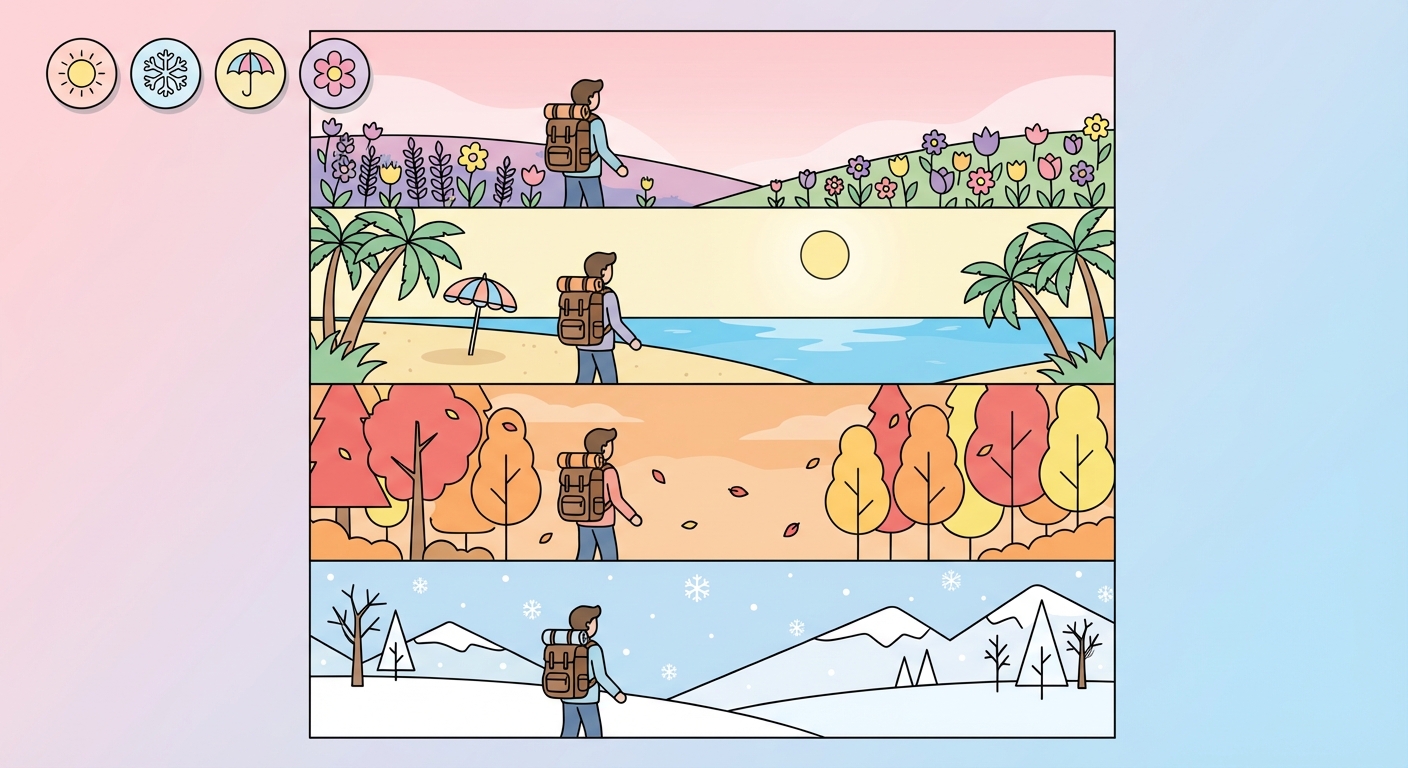
If you are planning a trip to India in late 2026, the biggest single decision is when to go. The country spans multiple climate zones, but most travel follows a clear seasonal pattern. The ideal window for most first-time visitors is October through March. Outside that, you face extreme heat or heavy rain. Here is how to match your itinerary to India's seasons.
October-November: The Sweet Spot
This is the best time to visit most of India. The monsoon has just ended. The air is clean, the landscape is green, and temperatures are pleasant across the northern plains, Rajasthan, and the Himalayan foothills. October and November also bring major festivals. Diwali (October-November) fills cities with lights and celebrations. The Pushkar Camel Fair in Rajasthan is a massive cultural event with livestock trading, camel races, and folk performances. Crowds are moderate, and accommodation prices are reasonable before the December peak.
December-February: Peak Season
This is India's coolest and driest period. Daytime temperatures in Delhi and Rajasthan range from 15°C to 25°C. It is the prime time for visiting the Taj Mahal, exploring desert forts, and trekking in southern hill stations. The Carnival in Goa happens in February or March, with parades and beach parties. The trade-off is high demand. Flights and hotels in Goa, Rajasthan, and Kerala book out months in advance. Prices for domestic flights and mid-range hotels can double compared to October. If you travel in this window, book everything at least three months ahead. Holi, the festival of colours, usually falls in March. It is a joyful, messy celebration. If you want to experience it, plan to be in northern India around that date.
March-April: Transition Heat
By March, the heat begins building across the plains. Daytime highs in Delhi reach 30°C to 35°C. This is a good time for hill stations like Darjeeling, Manali, or Shimla, where the weather stays mild. The Carnival in Goa may still be running in early March. After mid-April, the plains become uncomfortably hot for sightseeing. This is also a low season for tourism, so you can find good deals on accommodation and flights if you can handle the heat.
May-June: Extreme Heat
These are the hottest months in most of India. Temperatures in Rajasthan and the Gangetic plain regularly exceed 40°C. Delhi can hit 45°C. Sightseeing in the middle of the day is punishing. The best options are high-altitude destinations: Ladakh, Spiti Valley, and the Kashmir valley. These areas are dry and pleasant (15°C to 25°C) during these months. Coastal Kerala and Goa also stay warm but humid, with occasional pre-monsoon showers. If you must travel in May or June, stick to the mountains or the far south. Avoid long bus journeys in the plains.
July-September: Monsoon Magic
The monsoon arrives on the west coast around June and spreads across the country by July. Heavy rain disrupts road travel and causes flight delays. Many hill stations become slippery and prone to landslides. However, this is a spectacular time for certain regions. The Western Ghats, including Munnar in Kerala and the hill stations of Maharashtra, turn intensely green. Waterfalls are full. Onam in Kerala is a harvest festival with boat races and elaborate feasts. The post-monsoon period, late September to early October, is a brief window of clear skies and fresh air before the main tourist season begins. If you want to see India without crowds and at lower prices, and you do not mind rain, this is a viable option. Just avoid the northeast and Himalayan foothills, where landslides are most common.
Practical Recommendation
For a first trip, target October 15 to November 15. You get the post-monsoon freshness, manageable crowds, and the spectacle of Diwali. If you want winter chill and can book early, December through February is excellent. For a budget trip with fewer tourists, consider late September or early October. Avoid May and June unless you are heading to Ladakh. Pack layers for the north in winter, a rain jacket for the monsoon, and a wide hat and sunscreen for the dry heat. India rewards flexibility. The season you choose will define your experience.