Starting with a Contrast: Street Stalls vs. Regional Kitchens
Most visitors to Mexico head straight for the street-food stalls of Mexico City, and with good reason. Tacos al pastor, with its vertical spit of seasoned pork and charred edges, is a skill that takes years to perfect. But if you focus only on the capital, you miss a deeper, more varied food culture. The real contrast in Mexican cuisine is not between street food and restaurant food. It is between the quick, grilled snacks of the central highlands and the slow-cooked, sauce-heavy dishes of the states like Oaxaca and Yucatán. Understanding this split helps you plan a more rewarding eating itinerary.
Central Mexico: The Quick-Eat Zone
In Mexico City and the surrounding states, the dominant food is portable, grilled, or fried. Tacos al pastor are the star, but you should also look for tlacoyos-thick, open-faced corn cakes topped with beans, cheese, or chicharrón. They are a morning or early-afternoon staple at traditional markets and fondas. Quesadillas, while available everywhere, are best when made with hand-pressed corn tortillas and filled with squash blossoms or huitlacoche. A practical trade-off: street stalls give you speed and low prices, but fondas (small, family-run kitchens in markets) offer better hygiene and a wider choice of stews. Timing matters. Most stalls run out of popular fillings by 3 p.m., so go early for the best selection.
Oaxaca: The Mole and Tamale Heartland
Oaxaca requires a separate trip. This state is the home of mole negro, a dark, complex sauce that uses over twenty ingredients including chocolate, chilies, and nuts. It is slow-cooked for hours and served over chicken or turkey. Tamales here are wrapped in banana leaves, not corn husks, which gives them a sweeter, more aromatic flavor. You will also find tlayudas-large, crispy tortillas loaded with beans, meat, and cheese. The key recommendation for Oaxaca: do not rush a meal. A proper mole negro or a tamal from a market stall takes time to prepare, and the best versions come from family recipes passed down for generations. Avoid the tourist-heavy restaurants in centro; instead, head to the markets. The Mercado de la Merced in Oaxaca City has a row of fondas where you can taste three different moles in one sitting.
Yucatán Peninsula: Slow-Roasted Meats and Fresh Seafood
On the Yucatán Peninsula, the cooking method shifts to pit-roasting and citrus marinades. Cochinita pibil is the region's signature dish-pork marinated in achiote and sour orange, wrapped in banana leaves, and cooked slowly underground. It is served with pickled onions and soft corn tortillas. For seafood, ceviche is common along the coast, but a better choice is huachinango a la sal, a whole red snapper baked under a crust of salt. That preparation locks in moisture and flavor without adding oil. A practical trade-off: cochinita pibil is best eaten at lunch, as it is often sold out by evening. Ceviche, on the other hand, is a morning market item-made fresh daily, so the fish is at its best before noon. Coastal regions from Tulum to Progreso have small palapa restaurants that serve these dishes with a view, but the flavor is often better in inland towns like Valladolid or Mérida.
Practical Choices: Markets, Fondas, and the One Clear Recommendation
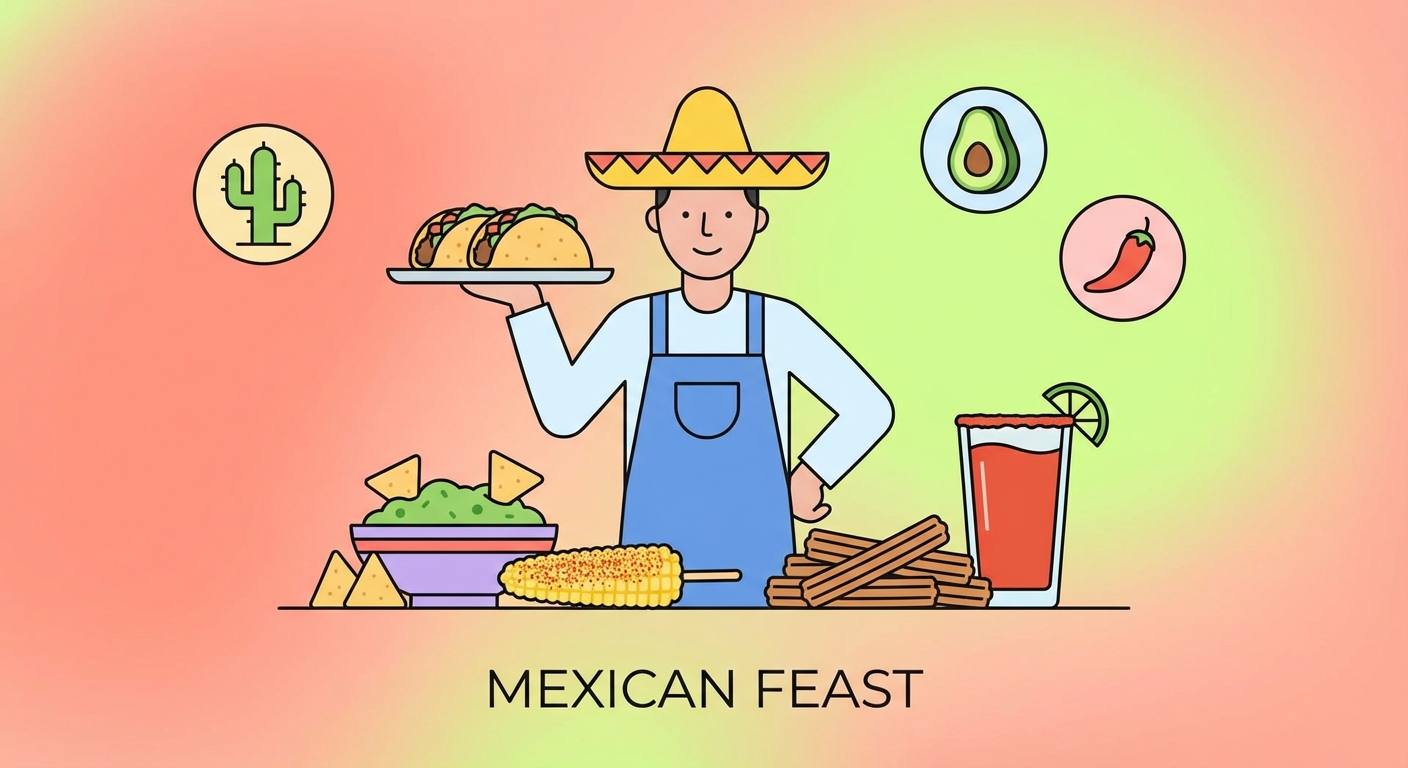
Across Mexico, the most reliable place to eat well is a traditional market. Every city has one, and each market contains a row of fondas. The food there is cheap, fresh, and made by cooks who have been doing it for decades. The trade-off is that these markets are noisy, hot, and crowded. If you need air conditioning and a menu in English, you will have to go to a restaurant, but you will pay three times as much for food that is often less authentic. One clear recommendation: spend your first two days in Mexico City eating only street food-tacos al pastor, elotes (corn on the cob with mayo and chili powder), and chiles rellenos from a market stall. Then travel to Oaxaca or Yucatán for the regional specialties. This sequence gives you the speed and variety of street food first, then the depth and complexity of regional cooking that takes days to prepare. Do not try to do all three regions in one trip. Two weeks per area is the minimum to eat well without rushing.