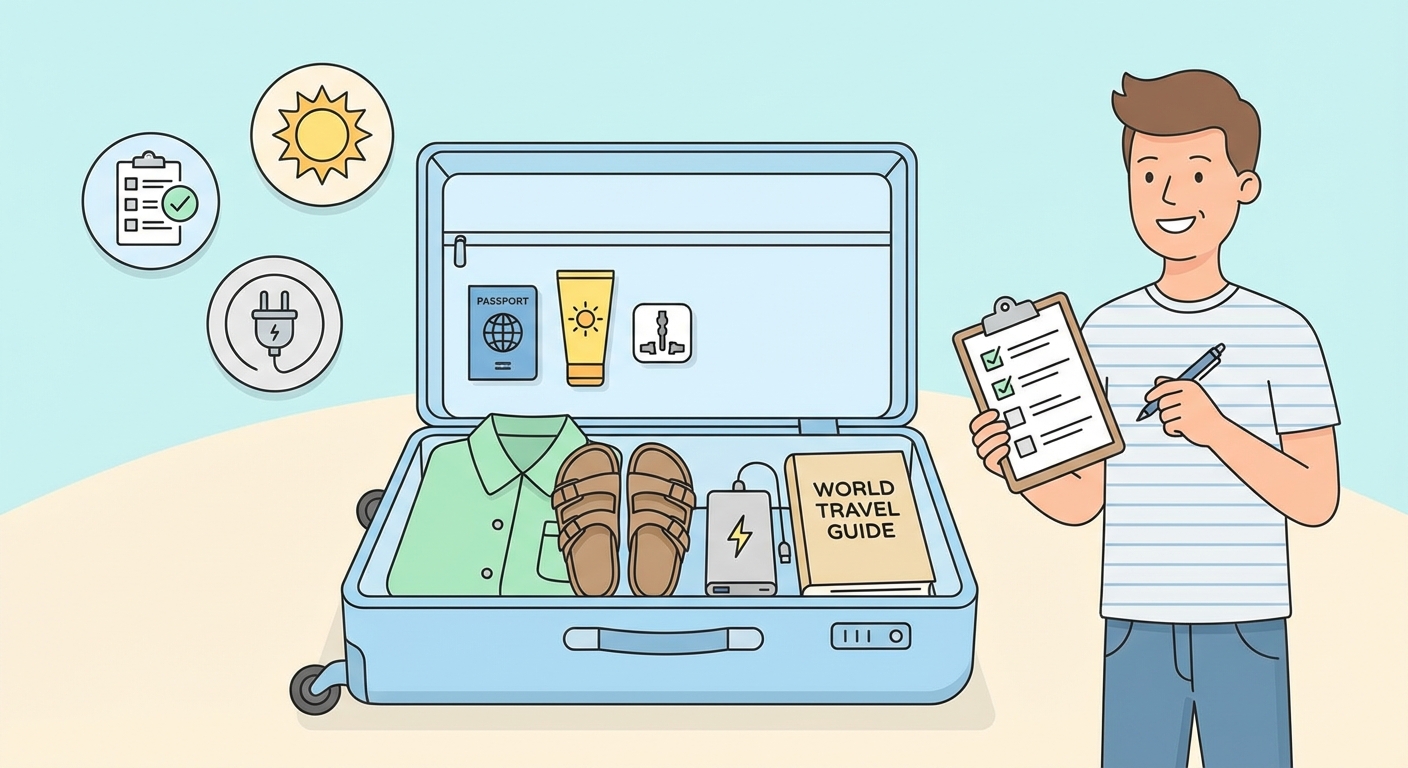
Start with the Weather: October in Greece
October 2026 in Greece means warm days, cool evenings, and a real chance of rain. The Mediterranean sun still feels strong at midday, especially in the Cyclades, but by 5 p.m. the temperature drops quickly. You need layers that work for a 25°C afternoon in Athens and a 15°C evening on Crete. A single heavy coat or a suitcase full of summer dresses will leave you uncomfortable. The solution is a mix of lightweight, breathable fabrics and one solid mid-layer.
Clothing and Footwear Essentials
Greece's terrain demands two distinct footwear types. For the Acropolis and Delphi, pack comfortable walking shoes with good grip. The marble paths are polished by millions of feet and become dangerously slick after a light rain. For Mykonos and other Cycladic islands, bring flat sandals with a back strap - the cobblestone streets and steep hills make flip-flops a hazard. A pair of dark, wrinkle-resistant trousers works for both ruins and dinner. Women: one midi dress in a synthetic blend that packs small and dries fast. Men: one pair of long linen trousers and one pair of tailored shorts. A light cashmere or merino sweater is worth its weight in gold for evenings.
- Walking shoes: waterproof if possible, broken in before the trip
- Sandals: leather or sturdy synthetic, with ankle support
- One warm layer: cashmere or merino, not cotton
- Rain jacket: packable, windproof, no lining
The Daypack That Does Double Duty
Bring a daypack that is under 20 litres. It must fit a water bottle, a thin rain jacket, sunglasses, and a hat. Many archaeological sites in Greece do not allow large bags, and you will often have to leave your main bag at the entrance. A pack with a hidden zip pocket protects your phone and cash. Avoid anything with a loud logo or bright colours - pickpockets target tourists in crowded areas like the Plaka in Athens or the bus queues at Fira.
Beach and Ferry Kit
October swimming is possible in Crete and the southern Cyclades, but the water is cool. Pack a quick-dry towel and a swimsuit that can double as a top under a shirt. For ferry travel between islands, the wind on deck is strong. A buff or a thin scarf keeps your neck warm and blocks dust. Bring a reusable water bottle with a carabiner clip - you can refill it at public fountains in most towns, and it clips to your pack during boarding.
What to Leave Behind
Leave bulky travel towels, multiple pairs of jeans, and anything that requires hand-washing and a long drying time. Greece's boutique hotels and Airbnb apartments usually provide towels and hairdryers. Do not pack a power strip unless you have more than three devices. The electrical sockets are Type C and Type F, same as most of Europe, and a simple adapter works for two devices. A portable battery pack is useful but not essential - cafés in Athens and on the islands have USB ports at tables.
One Final Recommendation
Pack for a seven-day trip in a 40-litre carry-on. Use packing cubes: one for tops, one for bottoms, one for underwear and swimwear. Wear your heaviest shoes on the plane. Buy sunscreen and insect repellent at a local pharmacy in Greece - the brands are effective and cost less than import prices. This system leaves room for a bottle of olive oil or a ceramic souvenir on the way home. If you follow this plan, you will not need to check a bag, and you will move easily between the Acropolis and a beach taverna without a second thought.