The Common Mistake and How to Avoid It
Most travellers pack for Vietnam as if it has one uniform climate. It does not. The country stretches over 1,650 kilometres from north to south, which means weather patterns vary dramatically. In January you can be freezing in Hanoi and swimming in Ho Chi Minh City. The practical fix is to plan your itinerary around the specific regions you will visit, then pack layers. Bring a light rain jacket, a fleece or jumper, and a couple of T-shirts. This combination works across most conditions. Avoid bulky winter coats unless you plan to spend all your time in the far northern highlands.
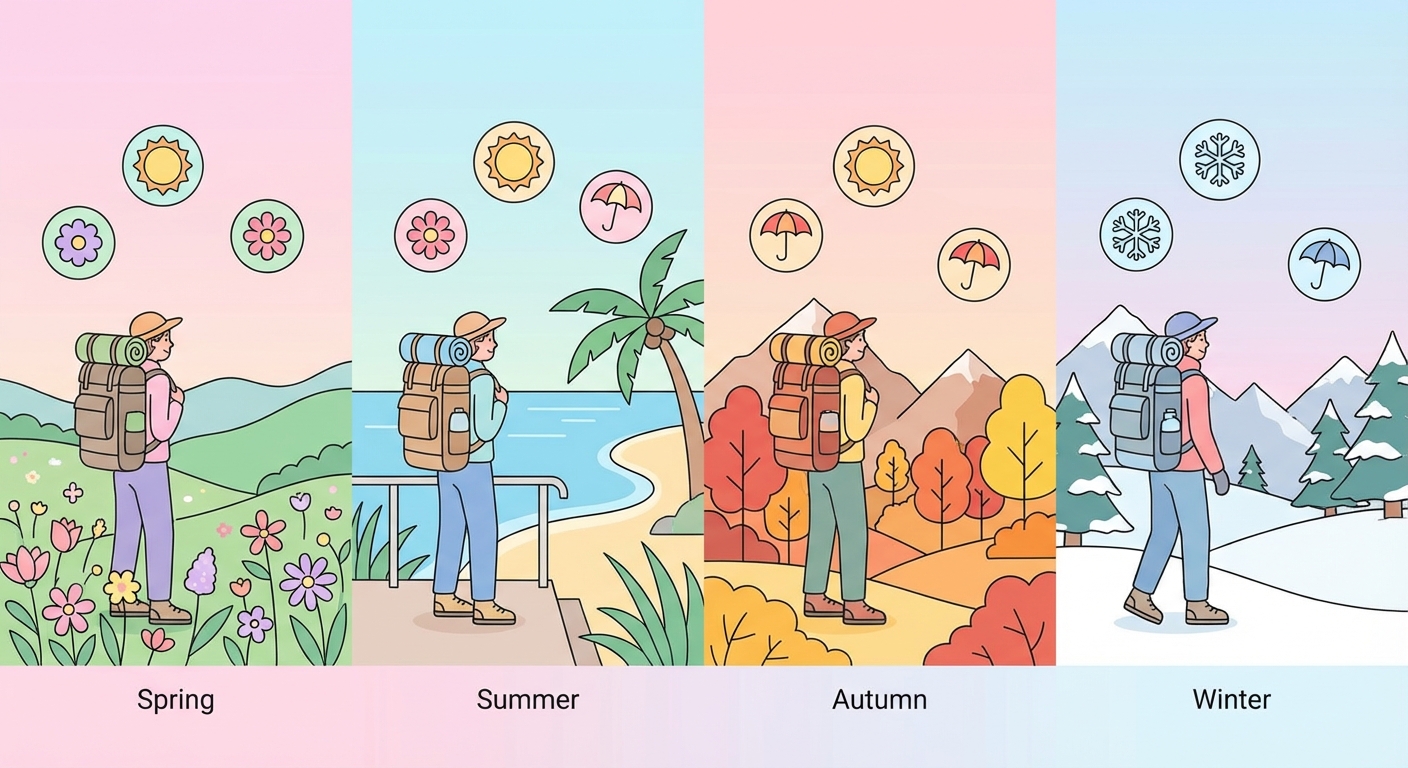
Winter (November to February)
Winter is the cool and dry season in the north. Temperatures in Hanoi and Ha Long Bay range from 10°C to 20°C. It can be overcast and drizzly, especially in January. The far north around Sapa sees single-digit lows, so bring a proper jacket. Central Vietnam, including Da Nang and Hoi An, has its rainy peak in October and November, but by December the rain eases and temperatures stay around 20°C to 25°C. The south remains warm and dry, with highs around 30°C. This is the peak season for tourism across the whole country. Book accommodation and trains well ahead. The trade-off is that you will share popular sites with many other visitors, but the weather is generally comfortable for sightseeing.
Spring (March to April)
Spring is a short, transitional window. In the north, temperatures rise to 20°C to 28°C, and the famous grey skies clear. This is the best time for trekking in Sapa and visiting Hanoi. Central Vietnam stays warm and mostly dry, though brief showers can occur. The south is hot, with temperatures above 30°C, and humidity begins to build. Spring is less crowded than winter. The main drawback is that the weather can be unpredictable in the north-a sudden cold spell or a week of light rain is possible. If you have flexibility, aim for late March or early April.
Summer (May to August)
Summer is hot and wet across most of the country. In the north, temperatures often exceed 35°C, and afternoon thunderstorms are common. Halong Bay can be hazy. Central Vietnam sees its dry season, with clear skies and temperatures around 30°C to 35°C. This is the best time for beach holidays in Da Nang, Hoi An, and Nha Trang. The south has its monsoon season, with heavy but usually short downpours in the afternoon. Mornings are often sunny. The benefit of summer travel is lower prices and fewer tourists. The downside is that you will need to plan indoor activities for the hottest part of the day and carry waterproof gear. Typhoons are possible along the central coast, especially in August, so check forecasts before booking boat trips.
Autumn (September to October)
Autumn is another transitional period. In the north, the heat and rain of summer ease, and temperatures drop to a pleasant 25°C to 30°C. September can still have typhoons in central Vietnam, but by October the weather stabilises. The south remains hot and humid, with the tail end of the monsoon. Autumn is a good compromise for travellers who want to see both the north and the south in one trip. The rice terraces in Sapa and Mu Cang Chai are golden and ready for harvest in September and October-a major draw for photographers. The trade-off is that central Vietnam can be wet in September, so schedule beach time for the south instead.
Practical Choices and Final Recommendation
Your best season depends on what you want to do. For northern trekking and cultural sightseeing, March-April or September-October offer the most comfortable conditions. For southern beaches, the dry season from December to April is ideal. If you want to avoid crowds and save money, travel during the off-peak season from May to August, but accept that you will need to manage heat and rain. For a balanced trip covering both ends of the country, plan for March-April or September-October. Pack a light raincoat, a fleece, and sturdy walking shoes. Avoid the mistake of assuming one climate fits all-check the regional forecast for each city on your itinerary one week before departure.