Don't Eat Where the Menu Has Photos of Every Dish
The most common practical mistake travelers make in Vietnam is choosing a restaurant based on the laminated menu with glossy photos of every dish. These places cater almost exclusively to tourists. The food is often pre-cooked, reheated, and served at a temperature that has sat under a heat lamp. The prices are higher, and the flavours are dull.
To avoid this, look for places with a single dish or a short hand-written menu in Vietnamese. If the restaurant has plastic stools that are low to the ground, that is a good sign. Eat where locals eat during their meal times. In Hanoi's Old Quarter, for example, you will find small shops that sell only one or two items. The turnover is high, so the ingredients are fresh.
Pho: The National Dish and Where to Find It
Pho is Vietnam's most famous dish. It is a broth of beef bones, ginger, and star anise, served with flat rice noodles and thin slices of beef. The key is the broth, which should be clear and savoury, not cloudy or greasy. The best time to eat pho is breakfast. Most local pho shops open by 6 am and close by noon, because they sell out.
In Hanoi, try Visit Pho Thin. This shop has been open for decades and serves a version with beef that is stir-fried before being added to the broth. That extra step adds a layer of flavour that is different from the standard boiled-beef pho. In Ho Chi Minh City and the south, the pho broth tends to be sweeter and the noodles softer. Both versions are worth trying, but you should eat at least one bowl in the north, where the dish originated.
Banh Mi: A Sandwich That Requires Good Judgment
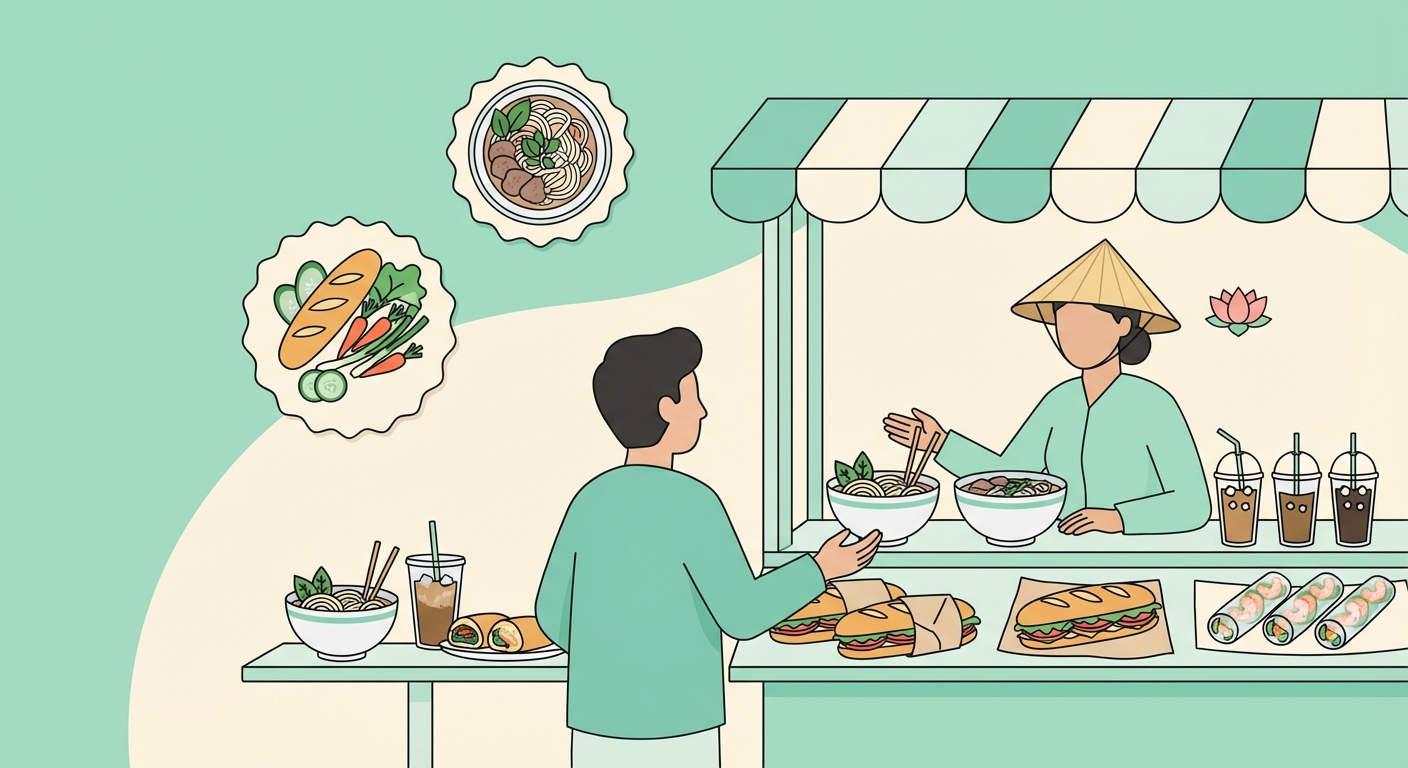
Banh mi is the Vietnamese take on a French baguette sandwich. The bread should be light, crisp on the outside, and airy inside. The filling usually includes grilled pork, pâté, pickled daikon, cilantro, and chilli. A good banh mi costs between 15,000 and 30,000 VND (roughly 0.60 to 1.20 USD). If you pay more than that, you are in a tourist spot.
The trade-off is between freshness and convenience. Street stalls make the sandwich to order, and the bread is usually still warm from the oven. Cafes that sell banh mi all day often use bread that has been sitting out. The best strategy is to find a stall that has a queue of local workers during lunch. That queue means the bread is coming out of the oven in batches. Wait in that line.
Street Food in Ho Chi Minh City and Dong Huong Street
Street food in Ho Chi Minh City is abundant, but quality varies block by block. Dong Huong Street in District 1 is a reliable corridor for several classic dishes in one walk. You can get broken rice (com tam) with grilled pork, fresh spring rolls wrapped in rice paper, and iced coffee with condensed milk. The street is busy from 11 am to 1 pm and again from 5 pm to 8 pm.
A practical choice: eat the fried spring rolls (cha gio) only if you see them being fried in fresh oil. Old, dark oil produces a bitter taste and a heavy stomach. If the oil looks clean and the rolls are golden and not greasy, they are safe to eat. If the vendor is using the same oil from the morning, skip it.
Timing and One Clear Recommendation
Meal timing in Vietnam follows a strict rhythm. Lunch is from 11 am to 1 pm. Dinner starts at 5:30 pm and is mostly over by 8 pm. If you arrive at a restaurant at 2 pm, you will get leftovers or a closed kitchen. Plan your day around these windows. Carry a small snack, like a piece of tropical fruit from a market, to bridge the gap between meals.
One clear recommendation: start your trip with a food walk in Hanoi's Old Quarter. Book a local guide for the first morning. They will show you how to order, how to sit, and how to eat with chopsticks and a spoon. After that walk, you will have the confidence to eat anywhere. The best food in Vietnam is not in a guidebook. It is on a plastic stool, on a sidewalk, served by someone who has been making the same dish for thirty years.