The Core Decision: Roaming, SIM, or eSIM
Before you leave for France, you need to choose how your phone will connect to the local network. Most travellers pick between three options: activate your home carrier's international roaming plan, buy a physical French SIM card, or install an eSIM that works with your existing phone. Each choice affects your cost, convenience, and coverage.
Roaming is the simplest because it requires no setup, but it is almost always the most expensive for data-heavy use like maps, social media, or video calls. Physical SIM cards sold at airports and shops give you a French number and reliable local rates, but they require you to swap the card in your phone and keep track of a separate number. eSIMs are a newer alternative that let you keep your home SIM in the phone while adding a French data plan digitally. The trade-off is that your phone must be unlocked and eSIM-compatible, which most modern models are.
When to Choose a Physical SIM Card
A physical SIM is a solid choice if you want predictable pricing and strong coverage across all of France, including rural areas and mountain regions. Major providers like Orange, SFR, and Bouygues Telecom sell prepaid SIMs at Charles de Gaulle, Orly, and train stations in Paris, Lyon, and the French Riviera. You will need to show ID for activation. Prices for a starter pack with a few gigabytes of data typically range from 10 to 30 euros.
One practical drawback: if your phone is locked to a specific carrier from your home country, a French SIM will not work. You also need to keep the original SIM safe while you travel. For short trips of a week or less, the hassle of swapping cards may not be worth the savings over roaming.
When an eSIM Makes More Sense
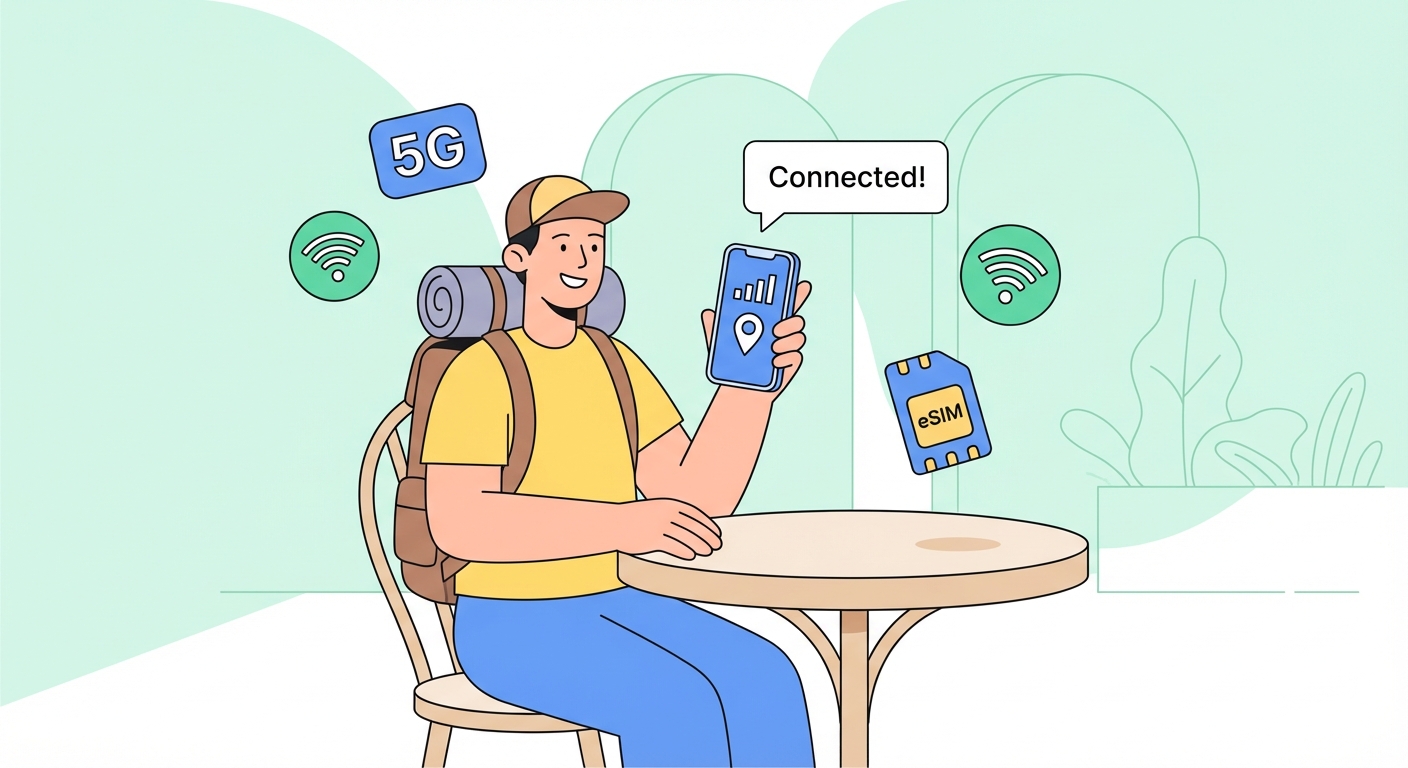
An eSIM is usually the best option for travellers who want to connect immediately after landing and avoid handling tiny pieces of plastic. You purchase the plan online before your trip, scan a QR code, and the profile installs onto your phone. Activation happens when you arrive in France and turn on mobile data. Coverage is generally the same as the local network the eSIM provider partners with, so you get 4G and 5G access in cities, along highways, and inside the TGV trains.
The main limitation is phone compatibility. Check your phone's settings: if you see an option to add a mobile plan under cellular networks, you likely support eSIM. Apple iPhones sold after 2019 and most Android flagships from 2020 onward are compatible. If your phone is older or locked to a specific carrier, an eSIM will not work.
Coverage Realities Across France
Mobile coverage in France is excellent in urban centres and along major transport corridors. Paris, Provence, the French Riviera, and Lyon all have strong 5G signals from the main operators. You'll lose signal in some deep valleys, remote hiking trails, and inside older metro tunnels. For travel through the Alps or the Massif Central, a provider with a partnership with Orange usually offers the widest rural reach. If you plan to stay mainly in cities and towns, any of the three connectivity methods will work fine. If you plan to drive long distances through rural France, choose a plan that uses the Orange network for the best chance of keeping a signal.
Timing and Practical Steps
For roaming, contact your home carrier at least a week before departure to confirm your plan's international data limits and daily caps. For a physical SIM, arrive at the airport with an unlocked phone and allow 20 minutes at the kiosk for purchase and activation. For an eSIM, buy the plan three to five days before you travel, install the profile before you leave home, and set it to activate on your arrival date. You'll find that the eSIM option saves you the most time at the airport, which is helpful if you are catching a connecting train or a ride to your hotel.
One Clear Recommendation
For the majority of travellers visiting France for tourism or business, a prepaid eSIM from a provider that uses the Orange network offers the best balance of cost, convenience, and coverage. It eliminates the need to find a shop after a long flight, works immediately when you land, and lets you keep your home number active for calls and texts. The only reason to choose a physical SIM is if your phone does not support eSIM or if you prefer having a local French phone number for restaurant reservations or local services. Roaming should be your fallback only if you expect to use very little data and do not want to change anything on your phone.