Your First Mistake: Packing for One Season
The most common mistake travellers make when packing for India is treating it as a single-climate destination. India is a country the size of a continent. On the same day in October, you can face dry heat in Rajasthan, monsoon humidity in Mumbai, and chilly mornings in Delhi. Many visitors pack only lightweight summer clothes and then freeze on an early morning train or get drenched in an unexpected shower. The fix is to pack a flexible layering system that works across the three main seasons you will encounter: warm, wet, and cool-dry.
Clothing and Weather Essentials
Focus on natural fabrics. Linen and cotton are your best choices for daytime heat. For women, long, loose cotton skirts or trousers paired with lightweight tops are practical and respectful at temples. For men, cotton trousers and collared shirts work better than shorts, which are only acceptable in beach towns or five-star hotels. Carry a pashmina or thin merino-wool wrap. It serves as a shawl in air-conditioned restaurants, a head covering at a temple, and a light jacket for cool evenings from November through February. Avoid synthetic fabrics that trap sweat and odour in high humidity.
Footwear: Two Pairs, Not One
Do not rely on a single pair of shoes. You need two: a pair of sturdy, closed-toe walking shoes for cities like Agra and Delhi, where pavements can be uneven and dusty, and a pair of sandals that you can slip off quickly. You will remove footwear dozens of times when entering temples, mosques, and homes. Sandals with a back strap are better than flip-flops because they stay on your feet on wet floors. For hiking in the Western Ghats or the Northeast, add a pair of lightweight trail runners. Break in all footwear before you leave home.
The Rainy Season Rule: June to September
If you travel between June and September, pack a compact umbrella and a lightweight, packable rain jacket. Umbrellas are widely available locally, but a decent travel umbrella is often better quality. Do not bring a heavy waterproof coat; it will be too warm in the humidity. A dry bag or a large zip-lock bag is useful for protecting electronics and travel documents during sudden downpours. For the rest of the year, a rain jacket is unnecessary weight unless you are heading to the Northeast or the Western Ghats.
Electronics and Health: The Practical Checklist
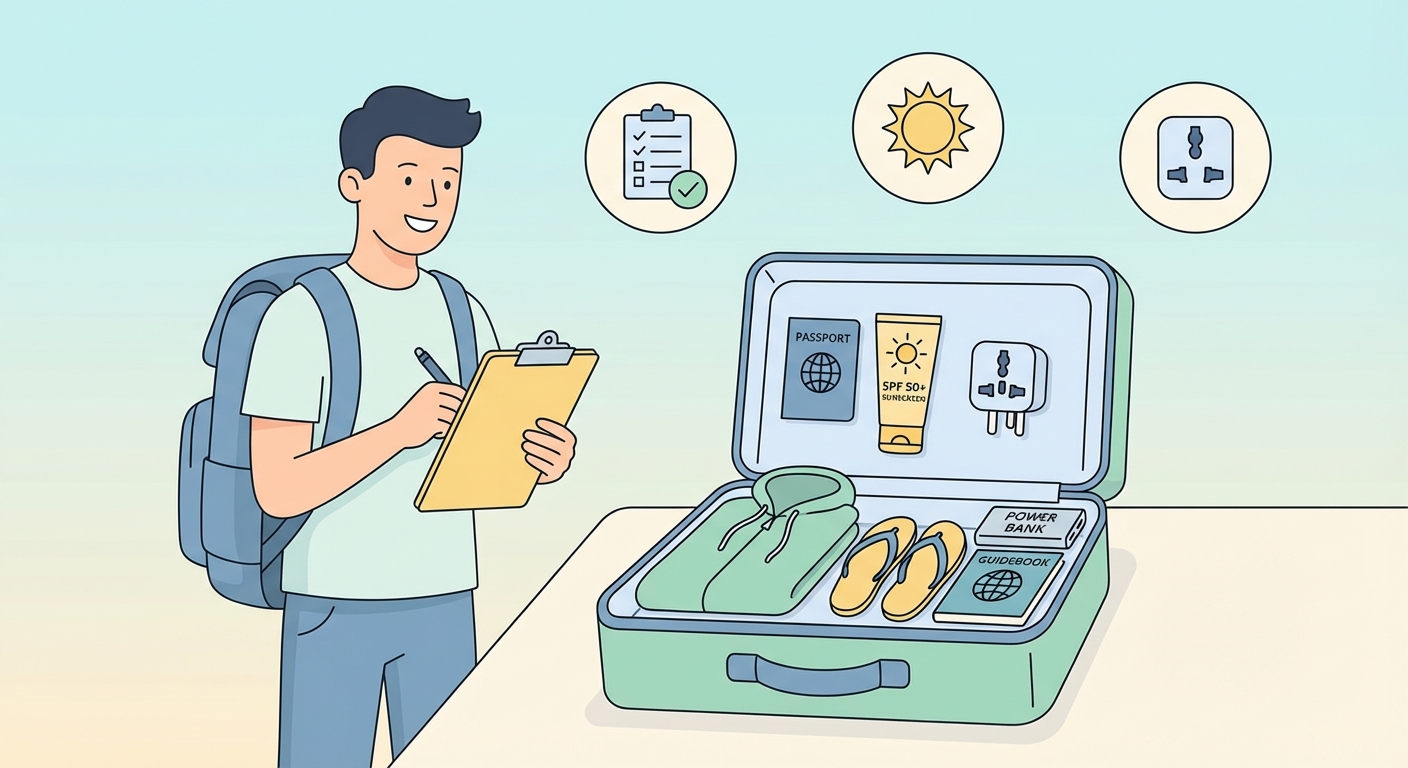
Power cuts are common in many parts of India, and voltage surges can damage sensitive electronics. Bring a universal adapter with surge protection. A portable power bank is essential for long train journeys and remote areas. For health, pack a basic medical kit that includes rehydration salts, antiseptic wipes, paracetamol, and any prescription medicines in their original packaging. Do not assume you can buy specific brands locally. Sunscreen and insect repellent are available in cities but can be expensive or hard to find in smaller towns. Bring your own supply of both.
One Clear Recommendation
Pack for a 7- to 10-day cycle, not for every day of your trip. Indian cities have excellent laundries that wash and iron clothes quickly for a few rupees. Choose a colour palette of neutrals and one accent colour so everything mixes and matches. Leave valuables at home. A simple, functional wardrobe of five tops, three bottoms, one wrap, one rain layer, and two pairs of footwear will serve you better than a suitcase full of options. You will move more easily through crowded markets, train stations, and temple courtyards.